

According to the health ministry of Lebanon, a second wave of explosions from wireless communication devices has left at least 20 people dead and over 450 injured.
Hezbollah’s walkie-talkies blew up in the Bekaa Valley, southern Lebanon, and the southern suburbs of the city Beirut—areas that are thought to be its strongholds.
A few of the explosions occurred during the funerals of the 12 individuals whom the ministry reported were killed on Tuesday when pagers belonging to Hezbollah militants exploded. The incident was attributed by Hezbollah to Israel. Israel has not offered a statement.
“exploding in Lebanon in the second wave result in 20 deaths and 450 wounded.”
The attacks coincided with the announcement of a “new phase in the war” by Israel’s Defence Minister Yoav Gallant and the redeployment of an Israeli army division to the north.
UN Secretary General António Guterres urged all sides to “exercise maximum restraint” and issued a warning about the “serious risk of a dramatic escalation.”
He told reporters, “It makes sense to blow up all these devices as a preemptive strike before a big military operation.”
After eleven months of cross-border combat precipitated by the war between Israel and Hamas in Gaza, there were already growing concerns about a full-scale battle.
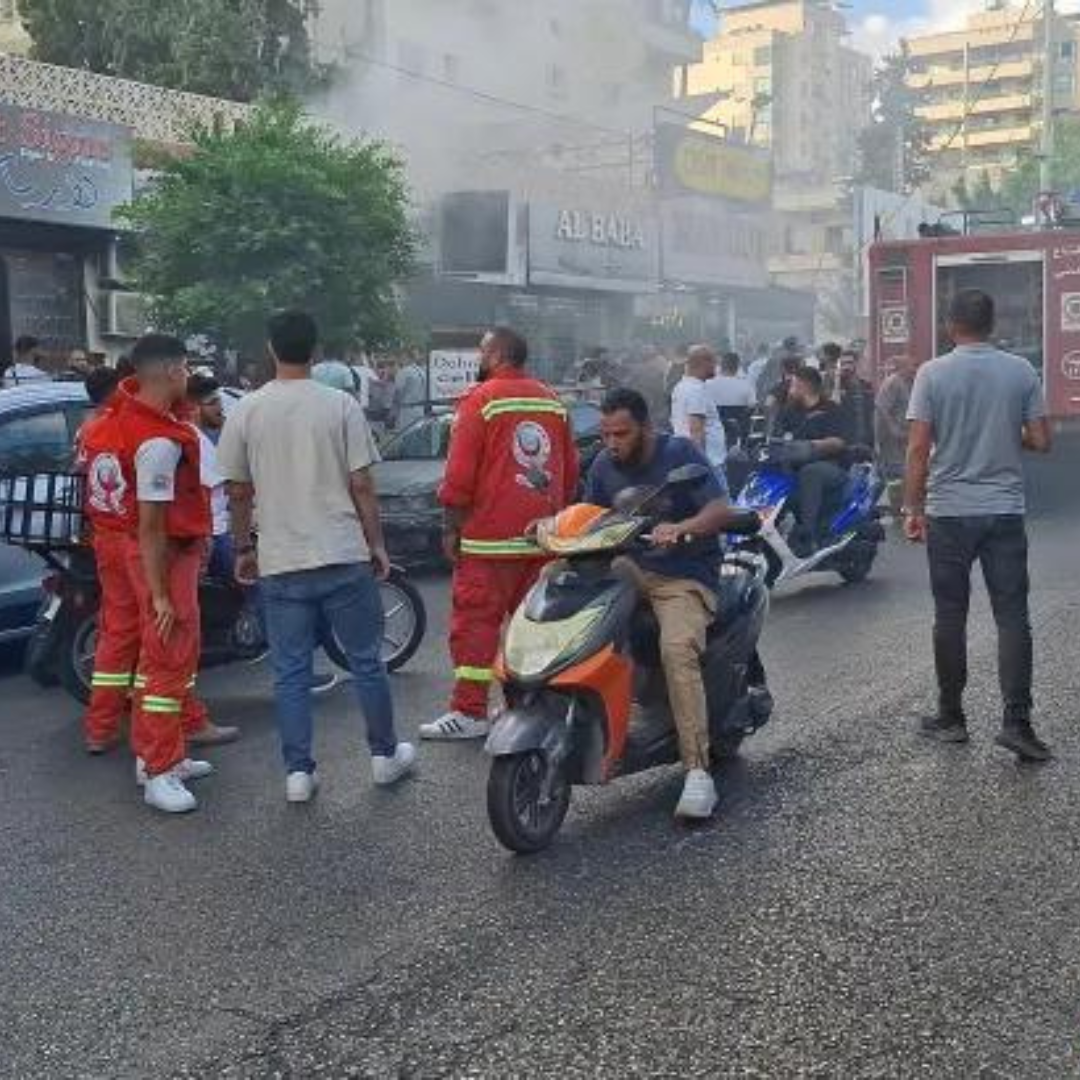
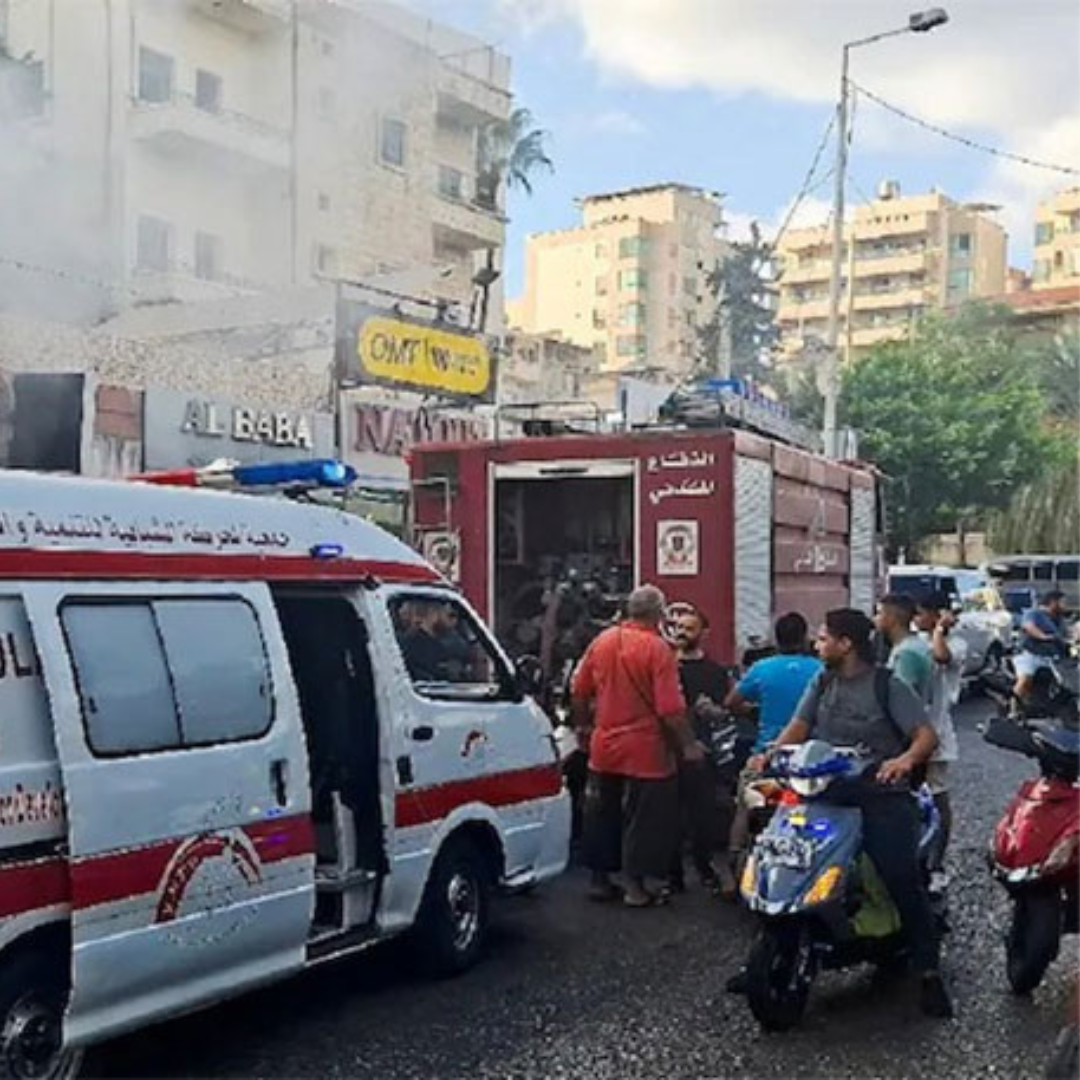
Benjamin Netanyahu, the prime minister of Israel, promised to get the tens of thousands of displaced citizens from the country’s north back “securely to their homes” just hours after the blasts on Wednesday.
Meanwhile, Israel is “opening a new phase in the war,” according to Defence Minister Yoav Gallant, and the “centre of gravity is shifting to the north through the diversion of resources and forces.”
The Israeli military acknowledged that an army division that was recently involved in combat in Gaza has been redeployed to the north.
Hezbollah claims that it is supporting Hamas, a movement that is also sanctioned by Iran and considered a terrorist organisation by Israel and many Western nations. The group claims that it will cease its cross-border operations only until the conflict in Gaza has ceased.
Hassan Nasrallah, the group’s strong leader, is scheduled to give a speech on Thursday, which may provide insight into what the group is preparing to do next.
Following the second wave of blasts, 13 fighters, including a 16-year-old child, have died, according to a statement released by Hezbollah’s media office on Wednesday.
It further stated that during the day, the organisation fired rockets against Israeli artillery positions, targeting Israeli forces in the Golan Heights and close to the border.
About thirty rockets crossed from Lebanon on Wednesday, according to the Israeli military, starting a fire but leaving no casualties.
It claimed that Hezbollah fighters were struck by Israeli jets in southern Lebanon.
The horrific blasts on Wednesday deal Hezbollah yet another blow and raise the possibility that Israel has compromised the organization’s whole communication system.The events of Tuesday, when thousands of pagers detonated simultaneously after people received messages they thought came from the group, continue to shock and infuriate many Lebanese.
The explosions claimed the lives of twelve individuals, including an eight-year-old child and an eleven-year-old boy, and injured 2,800 more, according to the health minister of Lebanon.
Around 17:00 local time (14:00 GMT) on Wednesday, a BBC team was attending a funeral for four of the deceased in the Dahiya area of southern Beirut when they heard a huge explosion.
The mourners were in a state of chaos and despair when news began to spread that explosions were also occurring in other regions of the nation.
Unconfirmed footage from social media purported to show a man collapsing after a minor explosion during a Hezbollah demonstration that drew sizable crowds.
According to the Lebanese Red Cross, explosions in the Bekaa Valley, southern Lebanon, and the capital’s southern suburbs have prompted the dispatch of more than thirty ambulances.
The deadly explosives “targeted walkie-talkies,” according to the health ministry. The AFP news agency was also informed by a Hezbollah-affiliated source that the group’s walkie-talkies had exploded.
According to the state-run National News Agency (NNA) of Lebanon, a walkie-talkie explosion inside a cell phone store in Chaat, in the northern Bekaa Valley, resulted in the death of one individual.
It recognised the gadget as an ICOM-V82 portable VHF radio, a model that the Japan-based electronics maker ICOM no longer manufactures.Another ICOM-V82 detonated at a home outside the neighbouring town of Baalbek, according to NNA. A table, a wall, and what looked to be a walkie-talkie with the label “ICOM” on it were all damaged in the video.According to a Lebanese security source cited by the Reuters news agency, Hezbollah bought the walkie-talkies five months ago, at the same time that they bought the pagers.
Two individuals were quoted by the Axios news website as claiming that Israeli intelligence services had provided Hezbollah with thousands of booby-trapped walkie-talkies to use as part of their emergency communications system during wartime.
The BBC contacted ICOM’s UK division for a comment on the reports, but it directed all enquiries from the media to the Japanese press office of the corporation. ICOM Japan has been contacted by the BBC.The New York Times and Reuters were informed by US and Lebanese sources that Israel had placed tiny explosives inside the pagers that detonated on Tuesday.
At least 60% of the patients an ophthalmologist at one hospital in Beirut told the BBC had lost at least one eye, and the majority had also lost a hand.”I think this is the worst day I’ve ever had as a doctor.” Dr. Elias Warrak stated, “I think there have been a tremendous amount of casualties and harm done.
“Unfortunately, the damage is not just to the eyes—some of them have damage to their brains in addition to any facial damage. We were not able to save many eyes.”
Source: BBC