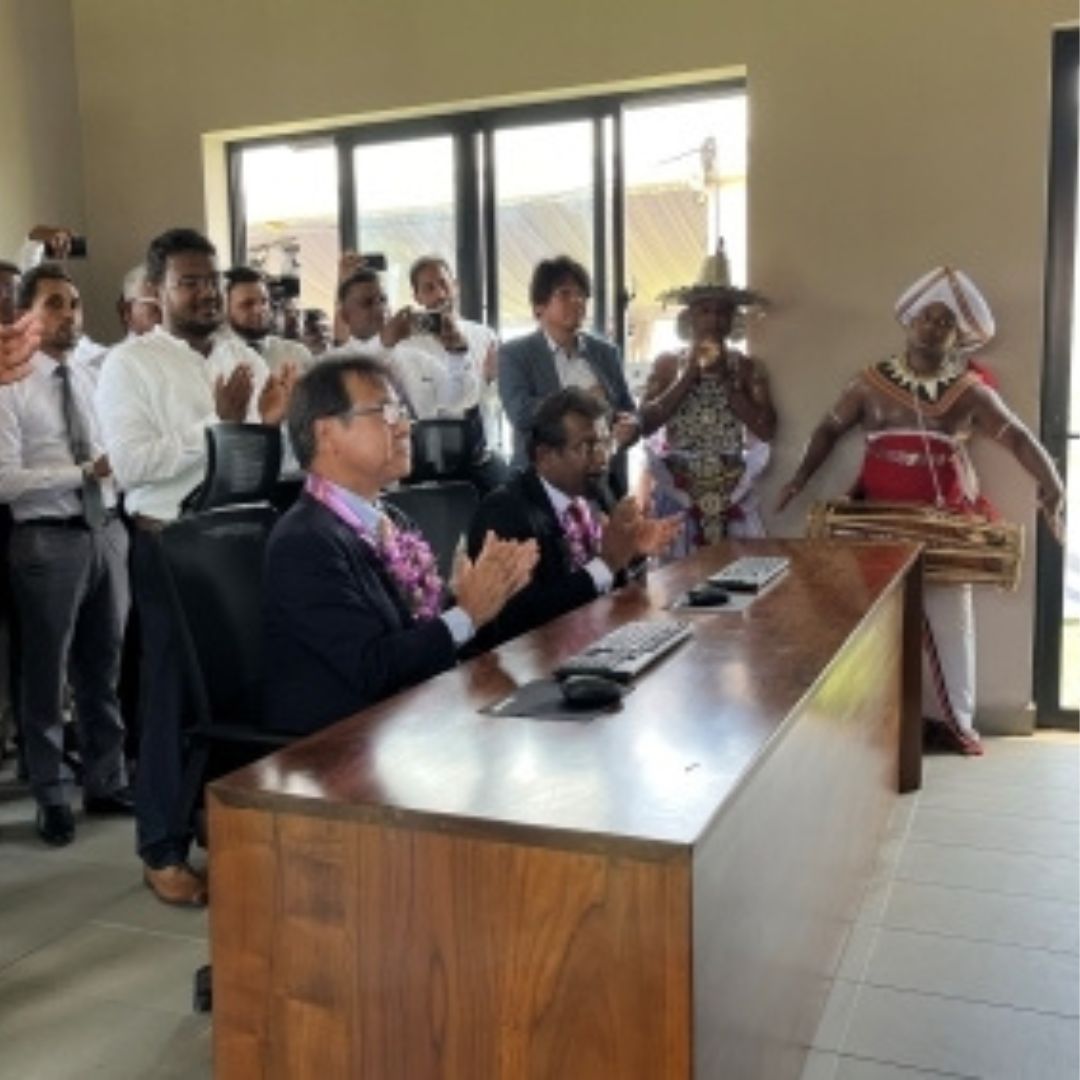
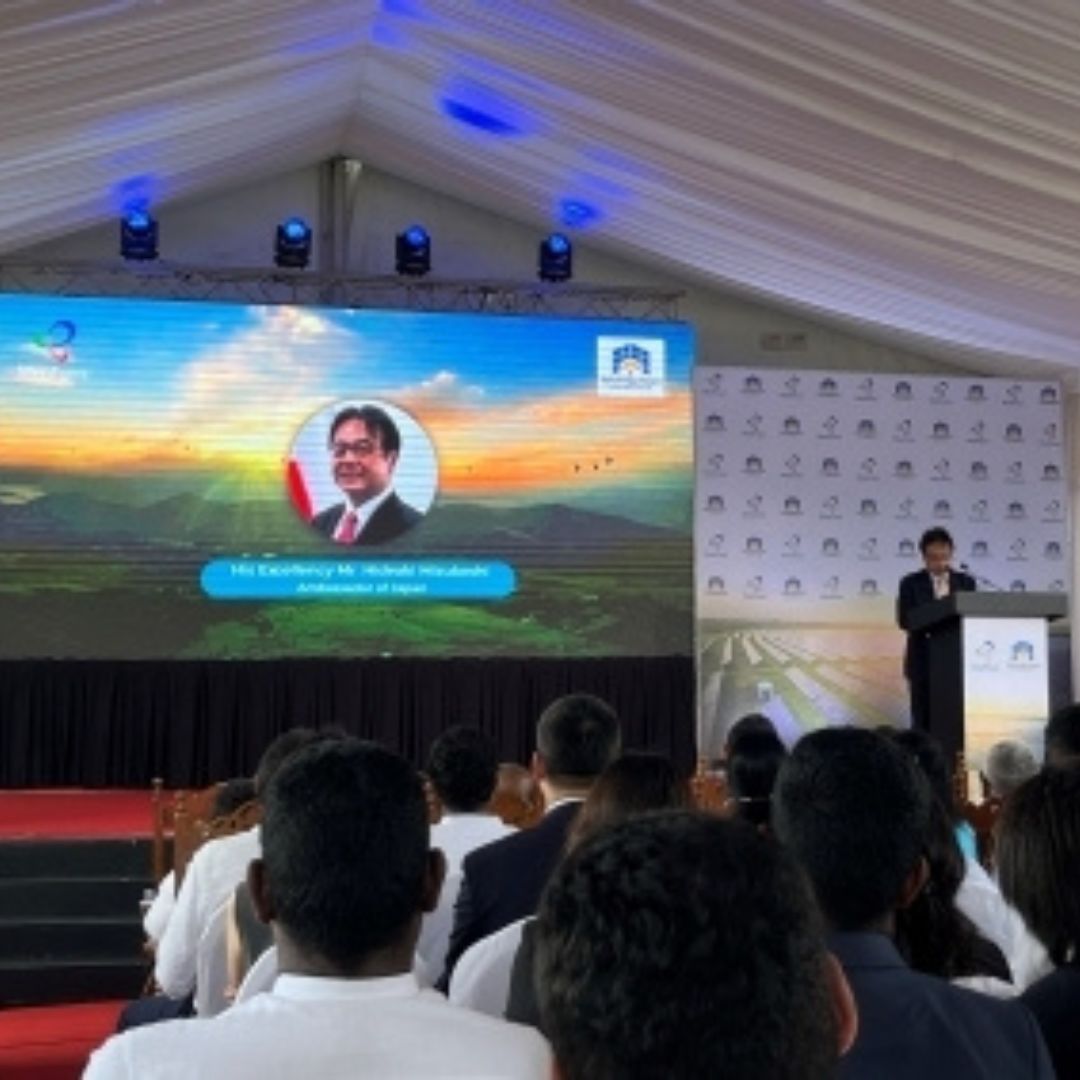
Yesterday (7), the first project under the Joint Crediting Mechanism (JCM), the Kebitigollewa Solar Power Plant, had its opening ceremony, which was attended by Japanese Ambassador to Sri Lanka Mizukoshi Hideaki. Among those in attendance were Manjula Perera, Managing Director of Windforce PLC, Shibata Tatsuhiro, President of Shibata Corporation Co., Ltd., and Dr. Sulakshana Jayawardena, Secretary to the Ministry of Power & Energy.The Ambassador emphasised in his speech the importance of the Kebitigollewa Solar Power Plant as a significant development in Japan and Sri Lanka’s bilateral cooperation. The JCM’s first project in Sri Lanka, the solar plant, is a significant step forward for renewable energy and demonstrates both countries’ commitment to sustainable development.
“Japanese Ambassador Hideaki is present at the opening of the Tokyo-funded Kebitigollewa solar power plant”
The JCM was created in October 2022 by a Memorandum of Cooperation and provides funding for initiatives aimed at lowering greenhouse gas emissions and advancing low-carbon technologies. The JCM framework’s beneficial effects are demonstrated by Shibata Corporation and Windforce PLC’s successful completion of this solar power plant. In addition to reducing reliance on fossil fuels and delivering clean, sustainable energy, the plant will help Sri Lanka meet its environmental and energy security goals. Furthermore, it will support community development by generating local employment opportunities, particularly for women.
In addition to addressing environmental issues, the JCM is essential in encouraging Japanese investment in Sri Lanka. Through the promotion of mutual growth and the reinforcement of economic ties, the JCM facilitates the transfer of advanced technologies and expertise. This project shows how sustainable initiatives can lead to both environmental and economic benefits, making it a model for future collaborations.The Ambassador emphasised the significance of the JCM while also pointing out Japan’s continuous assistance in the energy sector through Yen Loan projects, such as the ongoing building of transmission lines. These initiatives improve the efficiency of Sri Lanka’s power supply system and lower CO2 emissions by utilising low-loss gearbox technology from Japan. Resuming the Yen Loans on July 24th is another indication of Japan’s dedication to assisting Sri Lanka with its energy infrastructure.
The Japanese Embassy in Sri Lanka would like to extend its heartfelt appreciation to everyone who helped with this project. With this accomplishment, there is hope for more collaborative efforts under the JCM, which will help Sri Lanka meet its targets for renewable energy and contribute to a more environmentally friendly future.