
The Sinhala New Year is the foremost cultural festival of the Sri Lankan Buddhist community and the entire nation, celebrated in April to mark the sun’s transition from the house of Pisces to the house of Aries. Its most distinctive feature is the performance of auspicious rituals, such as lighting the hearth and partaking in meals, at the exact same time across the whole country. Accompanied by the call of the koha bird and the blooming of Erabadu flowers, this festive season is a beautiful time that renews family bonds, honors elders, and flourishes with a rich variety of traditional sweetmeats.
The Sinhala New Year is not merely a change in the calendar, but a unique festival that renews the spiritual and cultural bonds of Sri Lankan society. Its primary significance lies in the fact that, based on the sun’s transition from the house of Pisces to the house of Aries, the entire nation performs all rituals at the same moment according to a single set of auspicious times.
“Sinhala New Year-Srilanka”
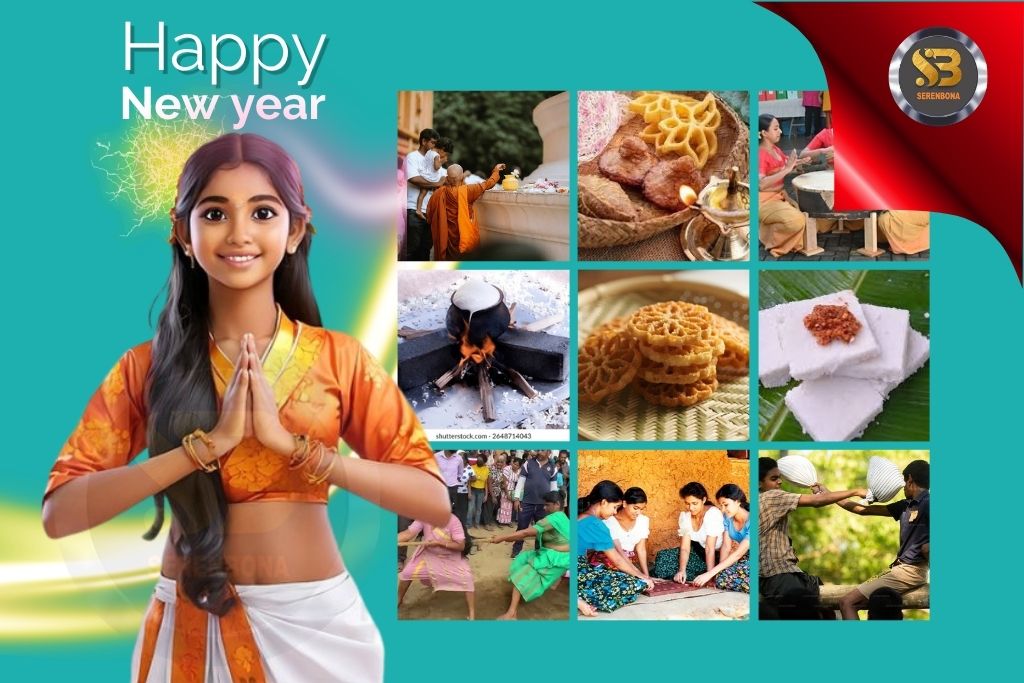
By performing even everyday tasks such as cooking, partaking in meals, and conducting transactions at a common auspicious hour, the country demonstrates its collective unity and discipline to the world. This festival, which shares a deep connection with nature, also serves as an occasion for the farming community to express their joy after the harvest. Environmental signs, such as the blooming of Erabadu flowers and the call of the koha bird, symbolize its arrival. Furthermore, the “Nonagathaya,” or the auspicious period between the old and new year, allows people to distance themselves from worldly pursuits and engage in religious observances, thereby enhancing their spiritual well-being.
Ultimately, the noblest specialty of this festival is the strengthening of harmony between family and society, achieved through honoring elders with a sheaf of betel leaves, visiting relatives and friends to forget past grievances, and gathering around a table filled with traditional sweetmeats.
The cultural importance of the Sinhala New Year lies in the fact that it is a unique process that renews human relationships and the inseparable bond between man and nature, transcending being just a celebration. This system of rituals, built around the movement of the sun, socializes noble human qualities such as gratitude, collectivism, and discipline. Particularly, the concept of “Nekatha” (auspicious time) represents a powerful unity unseen in any other culture, where the entire country engages in the same task simultaneously.
Respect between generations is established by honouring elders with a sheaf of betel leaves, while social cohesion and mental freedom are achieved by visiting relatives and friends to share food and drink while setting aside past grievances. Furthermore, the local artistic identity emerges through traditional games and folk songs, and this festival is fundamental in bequeathing a unique food culture to future generations. In conclusion, the New Year is the primary link that keeps the pride and cultural heritage of the Sinhalese nation alive.
For a foreign tourist, the Sinhala New Year is the best opportunity to experience the true cultural identity and rural customs of Sri Lanka first-hand. The tourism importance of this festival can be explained through several key factors:
Primarily, tourists get to experience Sri Lankan hospitality at its peak during this period. The local tradition of inviting even a stranger into one’s home to be treated with traditional sweetmeats is a surprising and incredibly friendly experience for them.
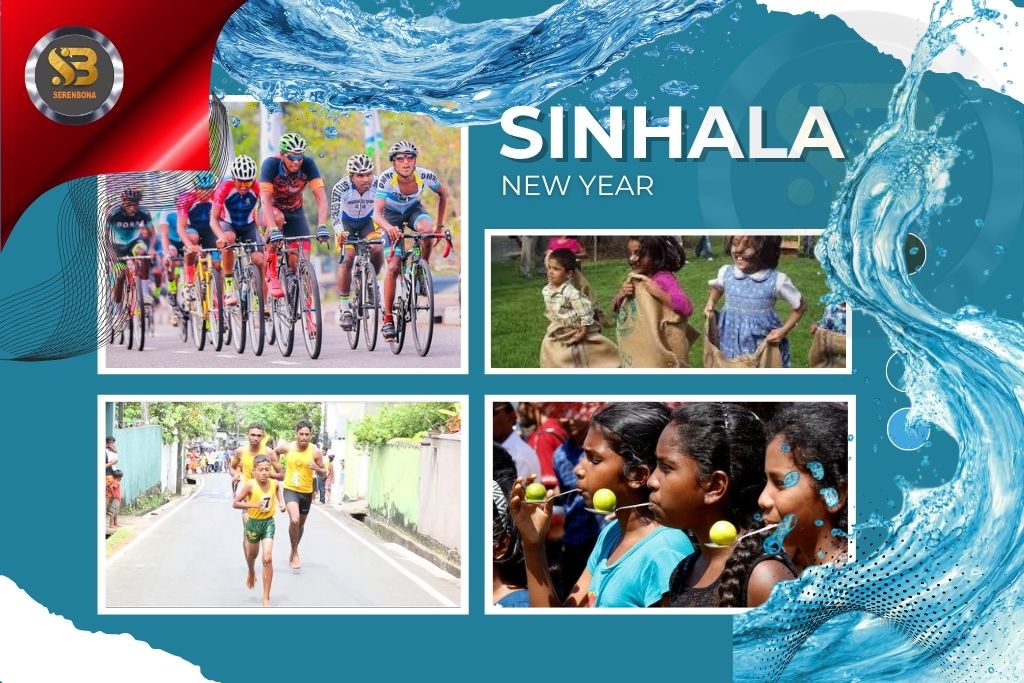
Additionally, they have the opportunity to savour a unique local food culture—featuring treats like Kavum, Kokis, Mun-Kavum, and Kiribath—that is exclusive to the Sinhala New Year. This collection of recipes is unlike any other found in the world. Through New Year festivals and traditional games such as tug-of-war, pillow fighting, and the playing of the rabana, they can closely witness the vitality and sense of community inherent in local life.
In particular, concepts such as the entire nation acting simultaneously according to auspicious times are cultural elements that evoke great curiosity and respect among tourists. Within the Sri Lankan tourism industry, this festive season serves as an invaluable opportunity to promote “Cultural Tourism.”
Foreign tourists have a wonderful opportunity to witness and actively participate in the Sinhala and Tamil New Year celebrations. Since Sri Lankans are generally very hospitable, they are often eager to involve foreigners in these festivities.
Tourists can participate in “Avurudu Utshava” held publicly in many villages and towns. Organizers often enjoy inviting them as special guests to join traditional games like tug-of-war and pillow-fighting. Many tourist hotels across the island organize special celebrations specifically for their foreign guests, featuring the performance of New Year rituals, traditional food tables, and fun games.
Tourists who build friendships with tour guides or locals often get the chance to visit their homes to observe the rituals first-hand and taste traditional New Year sweets. Additionally, in certain years, the Sri Lanka Tourism Promotion Bureau organizes special New Year celebrations centered in Colombo or other major tourist zones specifically for visitors.
Tourists can request to include a New Year experience when arranging their travel plans through their travel agents. Information regarding local festivals can be found through social media, local news, or by inquiring with hotel staff and residents. In popular tourist areas like Habarana, cultural villages and village tours often host special New Year events during this season. Allowing foreigners to participate in these festivities while dressed in traditional attire, such as sarees or sarongs, will provide them with a truly unforgettable experience.
The Sinhala New Year serves as a living laboratory for foreign university students and investigative tourists to understand the depth and identity of Sinhala culture. It can be described as an occasion that encompasses numerous social and cultural elements, going far beyond a mere festival.
The connection between astronomy and nature is clearly demonstrated here. It is a matter of great curiosity for explorers how an entire nation performs rituals such as starting work and consuming food at the exact same time, based on the transition of the sun from the house of Pisces to the house of Aries. While many other cultures in the world have festive seasons, students can study the scientific and astrological basis of following “Nekath” (auspicious times) set down to the very second.
The sociological aspect is also vital. Concepts of cleanliness and health emerge through rituals like the “bath for the old year” and “anointing of oil,” while the strong bonds of family and society are displayed by worshipping elders with betel leaves. The mental discipline and collectivism shown by setting aside grievances to engage in religious observances during the “Nonagathaya” (neutral period) provide excellent research topics for sociology students.
Furthermore, a broad understanding of folklore and food culture can be gained. Explorers have the opportunity to trace the roots of Sinhala culture by studying symbolic acts like the boiling of milk, the technology behind preparing traditional sweets, and the legends behind New Year games. This festival, which is deeply intertwined with an agricultural lifestyle, is perhaps the most valuable opportunity for foreign students to understand the economic and cultural foundation of Sri Lankan society.
It is very important to have media intervention to correctly introduce a festival with such a deep cultural foundation to foreign students and researchers.
The Serenbona Media Network is ready to provide the necessary guidance and facilities for foreign university students and tourists who wish to study or engage in exploratory tours regarding Sri Lanka’s magnificent Sinhala New Year culture.
Anyone interested in gaining a close experience of this noble cultural festival, which showcases the unique Sri Lankan identity to the world, can contact us via the following email address for further information:
Email address: ajwwnews@gmail.com
Samudra Shamali Weerasinghe