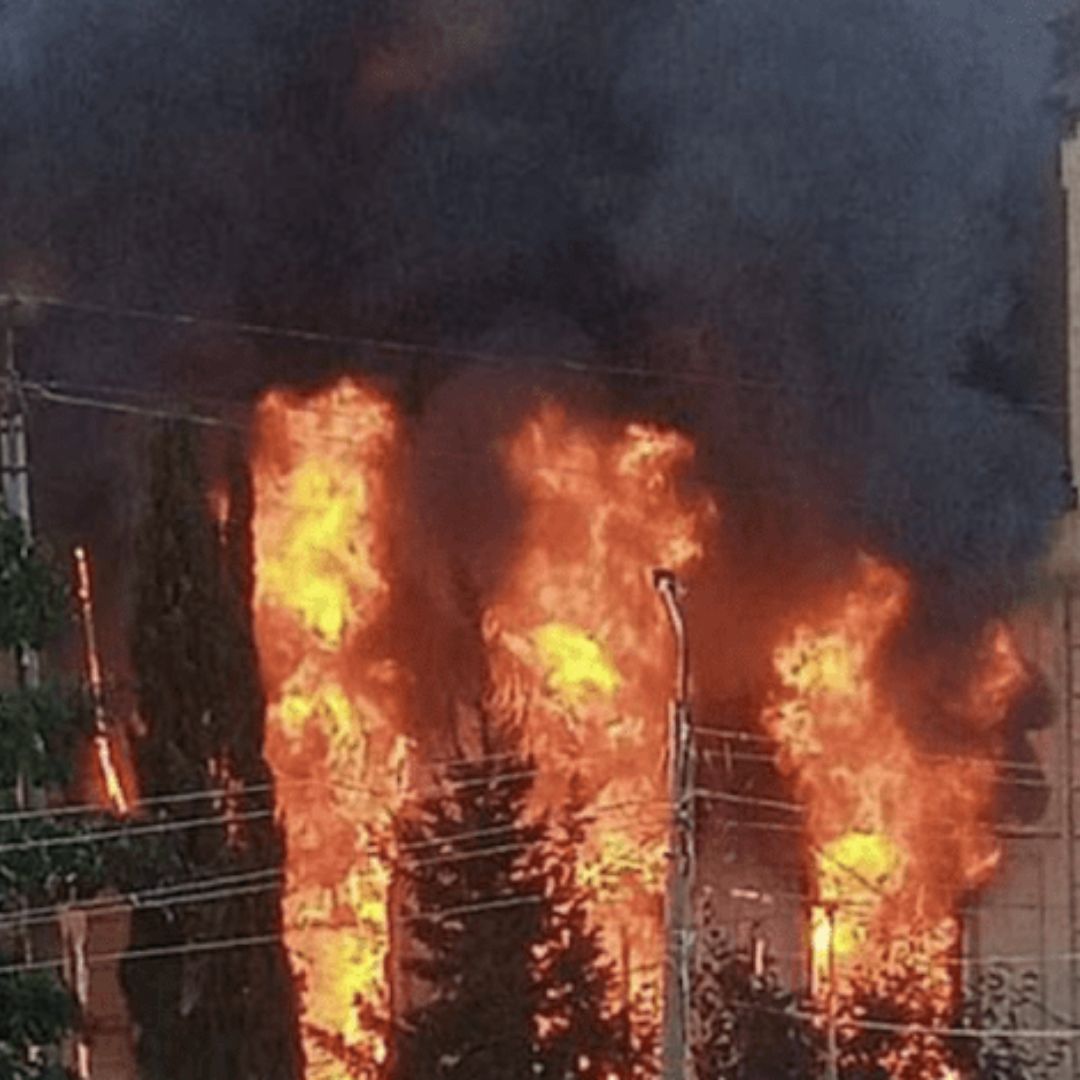
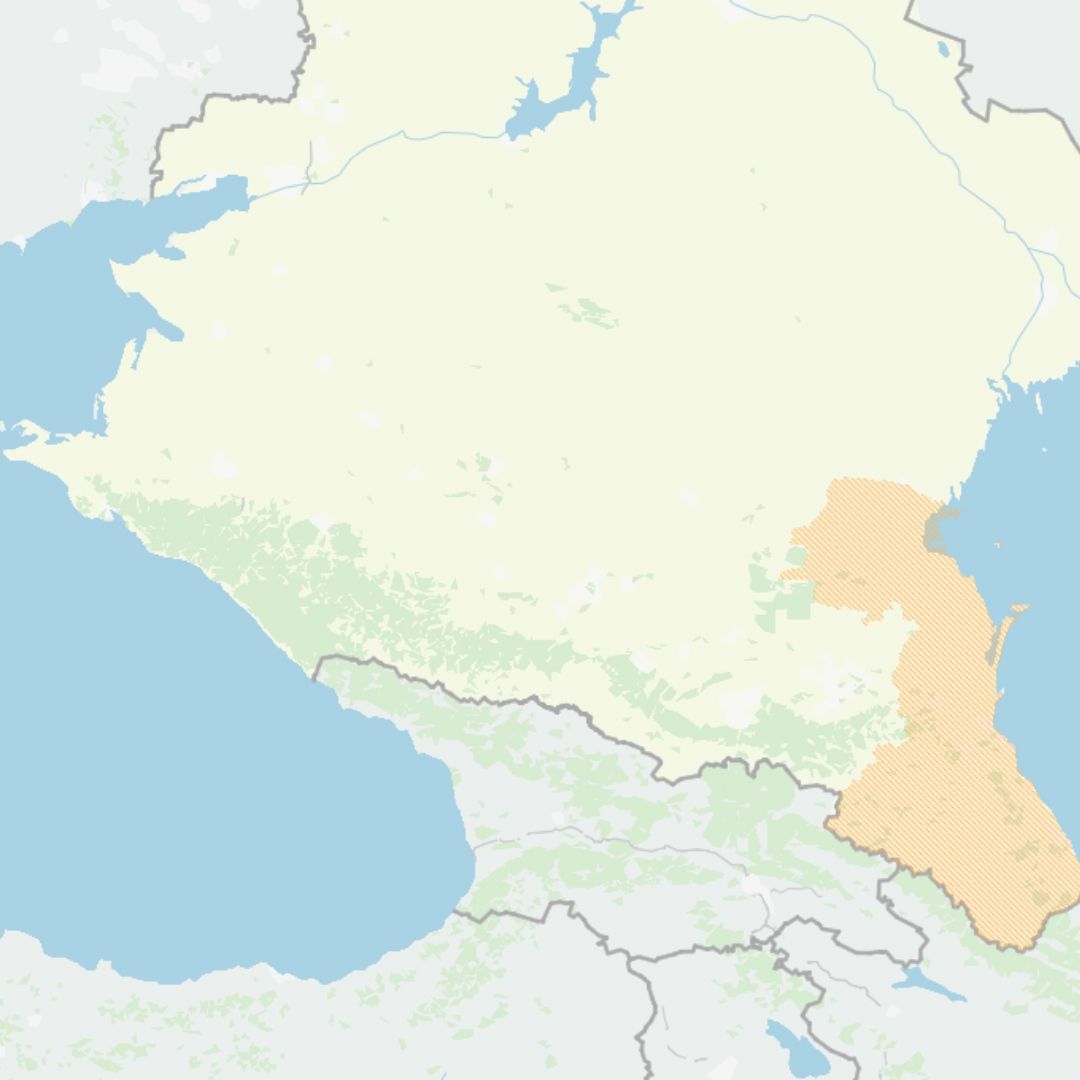
Russia’s North Caucasus republic of Dagestan has seen attacks on police stations, churches, and a synagogue that have resulted in the deaths of 19 police officers and a number of civilians. There were also six gunmen slain. A minimum of sixteen individuals were admitted to hospitals due to injuries.
In Dagestan, a predominantly Muslim republic in southern Russia that borders Chechnya, three days have been set aside for mourning.
During the Orthodox festival of Pentecost, the cities of Derbent and Makhachkala were the target of what appeared to be well-planned attacks, resulting in the deaths of an Orthodox priest. Later, Father Nikolai Kotelnikov, who had served in Derbent for more than 40 years, was identified by Sergei Melikov, the head of the Republic of Dagestan.Before a convoy of emergency vehicles arrived at the scene, footage that was shared on social media showed individuals wearing dark clothing shooting at police cars.
“19 people killed in attacks in southern Russia on churches and synagogues”
Gunmen attacked a synagogue and a church in Derbent, which is home to an ancient Jewish community. The buildings were later set on fire.
Islamist attacks have occurred in the past in Dagestan.
The attackers have not yet been officially named, but according to numerous reports in the Russian media, two of the gunmen were Magomed Omarov, Osman, and Adil, the sons of the head of the Sergokalinsky district near Makhachkala. Mr. Omarov was taken into police custody.
However, the head of the republic, Sergei Melikov, hinted in a video uploaded to Telegram that Dagestan was now directly involved in Russia’s war in Ukraine and that Ukraine had been involved in the attack. He declared, “We know who organised the terrorist attacks and what their objectives were.”
Similar assertions were made by Leonid Slutsky, the head of the Russian State Duma’s international affairs committee, who stated that the Dagestan attacks and the Sunday missile strike that claimed four lives in Russia-occupied Sevastopol “could not be a coincidence.” Mr. Slutsky declared, “I am certain that these tragic events were planned from abroad with the intention of dividing and inciting panic among the Russian people.”
However, Dmitry Rogozin, a prominent supporter of Russian nationalism in occupied Ukraine, cautioned that attributing every attack to “the machinations of Ukraine and Nato, this pink mist will lead us to big problems.”
"could not be a coincidence."
Although the Islamic State group claimed responsibility for the attack, Russian authorities blamed Ukraine and the West for the 147 fatalities that occurred at the Crocus City Hall venue near Moscow in March.
According to Dmitry Peskov, a spokesman for the Kremlin, Russian President Vladimir Putin expressed his sympathies to the families of those killed in the attacks on Dagestan and Crimea.
On Monday morning, Russian news agencies announced that the counterterrorism operation that was initiated following the attacks had concluded.
An extremist group known as the Caucasus Emirate, which subsequently changed its name to the Islamic Emirate of the Caucasus, carried out attacks in Dagestan as well as the nearby Russian republics of Chechnya, Ingushetia, and Kabardino-Balkaria between 2007 and 2017.
President Vladimir Putin had stated that “Russia cannot be the target of terrorist attacks by Islamic fundamentalists” in the wake of the Moscow attack on Crocus City Hall, citing the country’s “unique example of interfaith harmony and inter-religious and inter-ethnic unity.”
But three months prior, the FSB, Russia’s internal security agency, declared that it had foiled an IS attempt to attack a synagogue in Moscow.