

President Anura Kumara Dissanayake stated that it is the Government’s expectation to establish a strong public transport system that is comfortable, safe, efficient and reliable for the people, and that the Government is currently in the process of formulating a national policy to achieve this objective.
“541 New Appointments for Drivers and Conductors of the Sri Lanka Transport Board”
The President also noted that the Government is preparing plans to introduce new buses that meet proper standards while gradually removing older buses from the transport system. Although this cannot be accomplished immediately, he stated that by working in a planned manner over several years, it would be possible to provide the public with a high-quality bus fleet, which is a key objective of the Government.
President Anura Kumara Dissanayake made these remarks while attending the ceremony held this morning (10) at Temple Trees to present letters of appointment to 199 newly recruited drivers and 342 conductors representing all districts of the island for the Sri Lanka Transport Board.
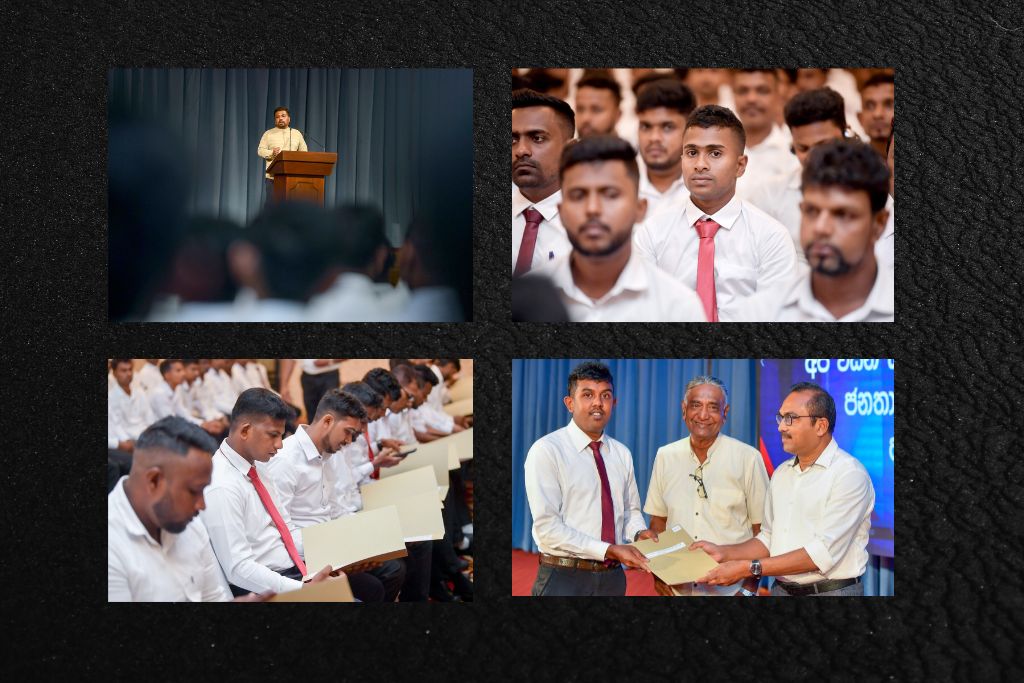
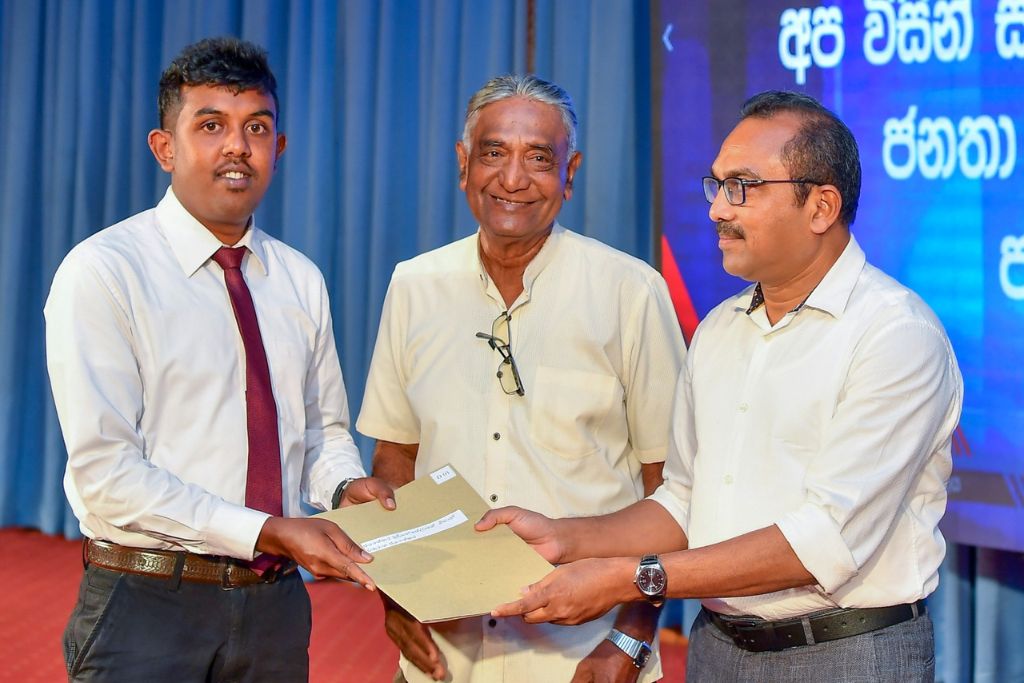
Marking the occasion, the President symbolically presented letters of appointment to several recipients.
Recalling the strong emotional bond that once existed between the people of Sri Lanka and the SLTB, the President expressed confidence that all those who received their appointments today would fulfil their responsibilities in rebuilding the institution, which had deteriorated over time due to political appointments and various irregular dealings, into a strong public transport service once again. He also extended his congratulations to all the new appointees.
Addressing the gathering President Anura Kumara Dissanayake further stated:
Beyond merely travelling from place to place, the people of this country have had a deep cultural connection with the Sri Lanka Transport Board. As drivers and conductors, you are now joining a service that carries such a history and has maintained an organic relationship with the people.
I believe that the SLTB must be elevated from its present condition. This improvement cannot be achieved through technology alone. The drivers and conductors who operate these buses must engage with passengers in a friendly and compassionate manner, while also giving due attention to their safety. I therefore believe that you will be able to introduce a new culture within the SLTB.
Although the SLTB once had a proud history, it gradually deteriorated due to political appointments and various irregular dealings. Certain political authorities used these institutions to expand their influence, which weakened the public’s emotional connection with the SLTB. I believe that this unhealthy political culture contributed significantly to that decline. In addition, the failure to adopt technological changes in line with global developments also contributed to the weakening of the relationship between the people and the SLTB.
As a Government, we firmly believe that the country requires a strong public transport system. There are several reasons for this. Even today, transportation costs place a heavy burden on many households in Sri Lanka. At the same time, there is doubt among the public as to whether they can obtain an efficient and reliable service through public transport. Because of this uncertainty, people tend to purchase private motorcycles or small cars to meet their transport needs. As a result, a significant portion of their income is spent on transport. In effect, people end up working merely to cover their travel costs. Therefore, the financial burden on households due to transport expenses must be reduced. We must create a transport service that does not become a burden on the people.
At the same time, Sri Lanka imports a large number of motor vehicles, which requires a significant amount of foreign exchange. If we develop a strong public transport system, I believe that we will be able to significantly reduce the country’s expenditure on vehicle imports. This will be economically beneficial.
Another important factor is environmental protection. Toxic emissions from vehicles contribute significantly to air pollution. Around the world there is growing attention on reducing such emissions. For the sake of future generations, we must protect the environment. Strengthening public transport can help reduce environmental damage caused by vehicle emissions.
Traffic congestion has also become a major issue today. A large number of human hours are wasted on the roads. If calculated economically, this represents a significant loss to the national economy. Therefore, improving the public transport system is essential for reducing traffic congestion.
However, it is not enough to simply formulate ideas about developing public transport. The public must receive a proper and comfortable service. Accordingly, we are currently preparing a national policy relating to buses. If passengers are overcrowded and buses operate without proper standards, the public will turn away from the service despite any efforts made to promote it. Therefore, we are preparing a national policy to determine what types of buses should operate on our roads.
This transformation cannot be achieved overnight. We do not have the capacity to remove the entire existing bus fleet and replace it immediately. Instead, newly introduced buses must meet proper standards while older buses are gradually phased out. If this process is carried out in a planned manner over several years, the entire fleet can be transformed into a modern, high-quality bus fleet. That is one of our key objectives.
Even if buses are comfortable, it will be of little value if the behaviour of the drivers and conductors is not appropriate. The lives of all passengers on board are in their hands. Therefore, as a Government, we cannot allow buses to be operated recklessly by anyone in any manner. Certain individuals who claim to represent private bus companies have expressed opposition to these measures, but we will continue to implement these reforms.
Every citizen boards a bus with trust in their safety. If passengers feel that their lives are at risk, no parent will entrust their children to public transport. Therefore, the present situation must change in order to build public confidence in the transport system. We will not allow buses to be driven under the influence of drugs. Necessary laws and inspections will be implemented accordingly. The behaviour and professionalism of drivers and conductors must therefore reach a higher standard.
Efficiency must also be improved. People expect to reach their destinations quickly and on time. Services must be punctual and reliable. Continuity is equally important; otherwise daily life will be disrupted. Our goal is to provide a comfortable, efficient and reliable public transport service.
To achieve this, we plan to introduce a fleet of comfortable buses beginning this month. Eight new buses will be received from the Government of Japan this month, while additional buses ordered by the Government are expected to arrive in August and September.
We also intend to establish a new company dedicated to providing comfortable passenger transport services. Gradually, older buses will be phased out of urban areas. A new fleet will be introduced for short-distance operations in major cities, while older buses will be removed step by step.
The quality of service provided to citizens is of utmost importance. As a Government, we are committed to ensuring a high-quality service. However, if the entire system is left solely to the private sector, monopolies could emerge. Therefore, the system should not be completely relinquished to private operators. Instead, we must establish a proper management structure.
The system should function as a coordinated partnership between the public and private sectors, with appropriate regulation to ensure a safe, comfortable, efficient and reliable service.
In the past, when there were around 21,000 private buses, there were approximately 19,000 individual owners. As a result, the service evolved more into self-employment rather than a structured industry, making it difficult to maintain consistent quality. Services are often unavailable when passenger demand is low. This has even affected aspects of the country’s social life—for example, people cannot find buses to return home after late evening activities.
Therefore, the Government’s responsibility is to establish an optimal and high-quality public transport service. We believe that a regional system should be introduced. Bus owners could integrate their buses into companies established on a regional basis, which would be responsible for providing continuous services.
If such services operate at a loss in certain areas, the Government could provide subsidies. Indeed, the current budget has allocated approximately Rs. 2 billion to provide transport services for rural routes.
The benefits of an efficient transport system are reflected in the broader economy. What matters is whether workers reach their workplaces efficiently and whether services and production function effectively. Measuring profits or losses solely on individual bus operations is therefore misguided. A strong transport service will ultimately improve both the economy and the quality of life of the people.
To strengthen the transport sector, we also require an efficient political leadership. The Minister and the two Deputy Ministers are working with great dedication to improve the sector. There is strong commitment from the political leadership to advance this field, which is essential for achieving the necessary transformation.
We also have a capable group of public officials. While there may have been challenges in the past, we judge individuals based on their present performance rather than past perceptions. We believe that our officials will unite and work towards achieving these goals.
Those of you who join the SLTB today also carry a great responsibility. The negative culture that has developed around the institution must change. Such change cannot occur merely through statements or documents—it must be reflected through actions and behaviour. I believe that all of you here today will bring a new approach to the Sri Lanka Transport Board, and I wish you success in that endeavour.
Expressing his views SLTB Chief Executive Officer M. A. N. Dhammika Ratna said;
The Sri Lanka Transport Board is the institution striving to elevate the State transport service to a better level. Having evolved through various organisational structures over time, including the People’s Transport Service and cluster bus companies, the SLTB has undergone many challenges. By 2026, however, it has once again begun to regain strength as a national transport institution.
At present, the SLTB operates 7,130 buses, of which more than 70 per cent are over ten years old. In fact, 3,848 buses are more than 12 years old. The current Government is implementing programmes to uplift the SLTB and transform it into a higher-quality transport service.
The event was attended by Minister of Transport, Highways and Urban Development Bimal Rathnayake; Deputy Minister of Urban Development Eranga Gunasekara; Members of Parliament Prageeth Madhuranga, Chandana Sooriyarachchi and Dhanushka Ranganath; Chairman of the Sri Lanka Transport Board Jeevaka Prasanna Purasinha; as well as senior officials from the Ministry of Transport and the Sri Lanka Transport Board.
(PMD)