
“Tourism recovery in five years—if we get the work right.”
For over forty years, the service he rendered to this country’s tourism industry has been infinite and immeasurable. He made immense sacrifices, working tirelessly day and night, striving to take the name of Sri Lanka to the world. This dedication sprang from his profound love for the tourism industry.
Foreign tourists were captivated by his charming, heartfelt conversation and his pleasant, graceful personality; they truly cherished his company. Many foreigners visiting the country vied for his services, such was the sincerity and bond he shared with them. Every traveler who stayed under his guidance eventually departed from the airport in tears, embracing him for hours—a testament to how deeply he was enshrined in their hearts.
It is doubtful whether this nation has fully utilized the vast wealth of knowledge possessed by this invaluable man. It is a tragedy that we have allowed his intellect, expertise, and international connections to remain buried and underused. This is the very moment our country needs his wisdom and services the most.
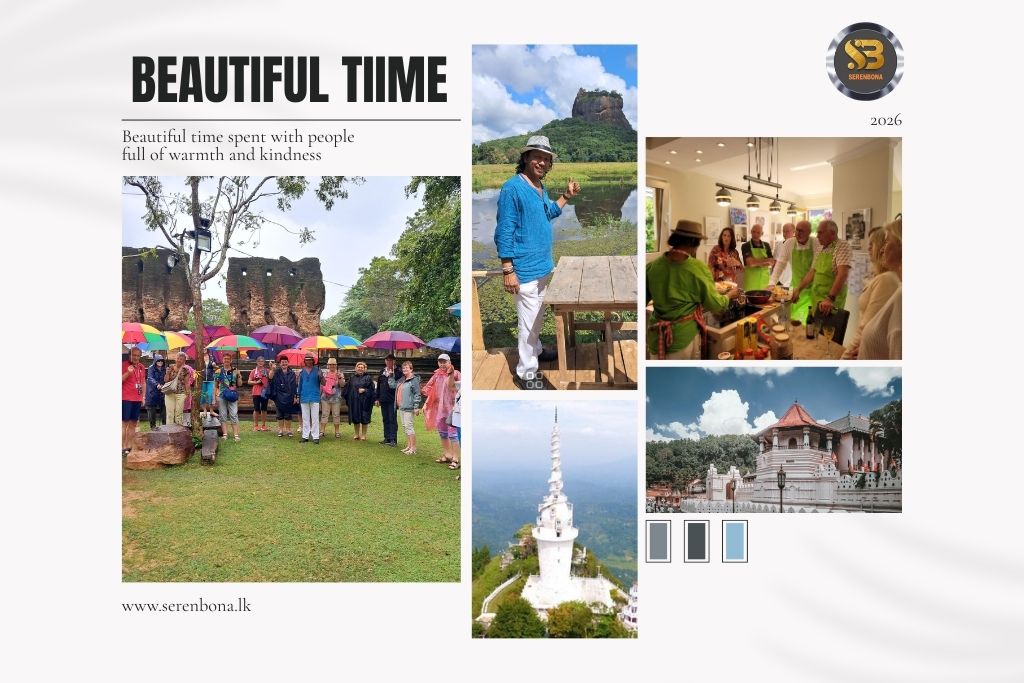
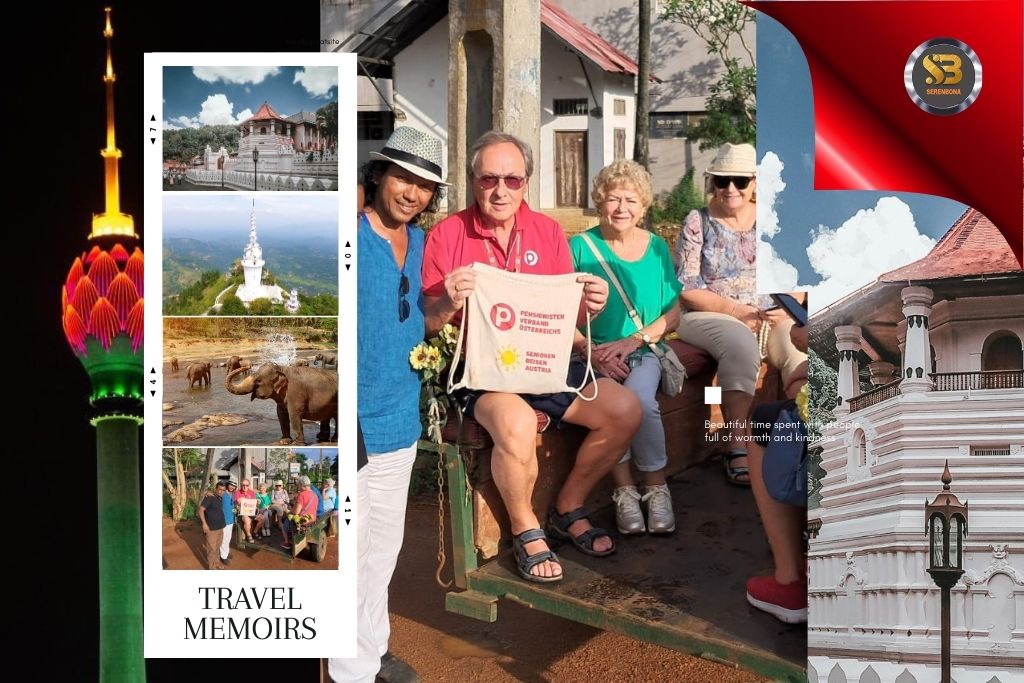
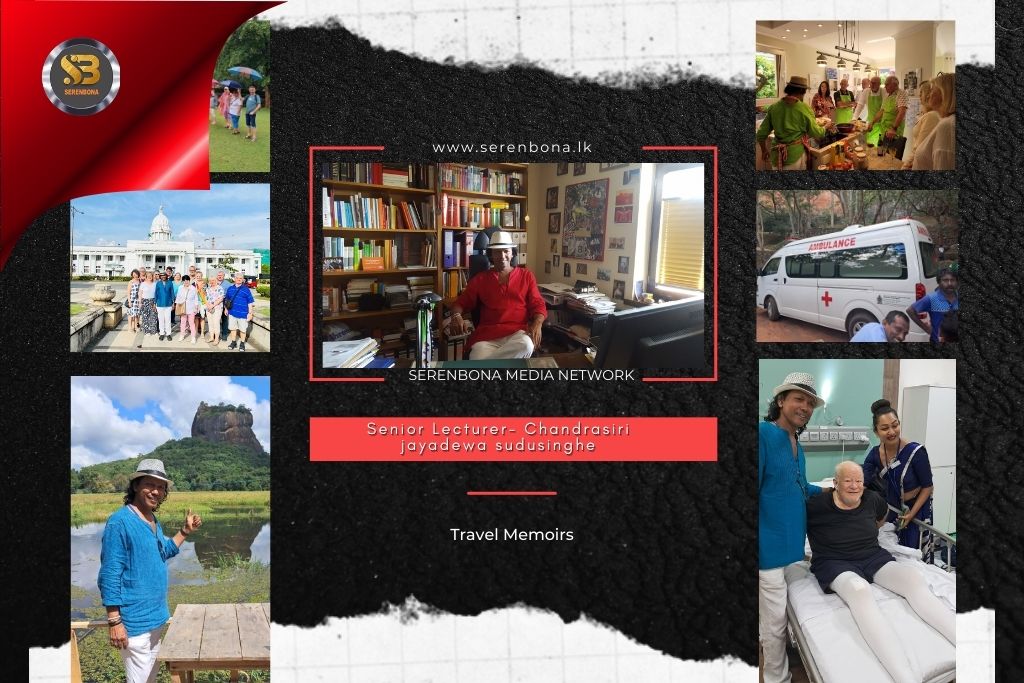
The wonderful, kind, and humble man who silently carries the Sri Lankan name to the world through immense dedication to tourism is Senior Lecturer Chandrasiri Jayadeva Sudusinghe. For the “Big Story” of the international Serenbona magazine, we went in search of him.
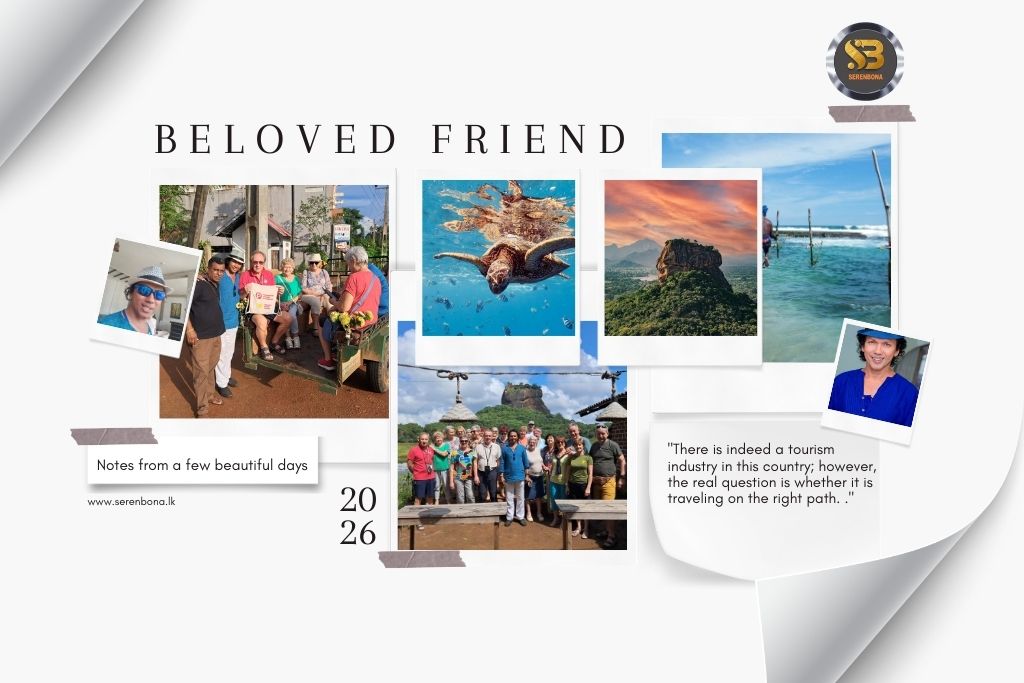
That is a good question. There is indeed a tourism industry in this country; however, the real question is whether it is traveling on the right path. If we are talking about a tourism industry that is properly managed and built on public awareness/education that does not exist in this country yet. Compared to other nations, we have more than enough resources. The real issue here is this: why aren’t we utilizing these resources effectively to steer our tourism industry toward the right path?
To be honest, our politicians lack a proper understanding of the tourism industry. The other thing is that politicians cannot make money through tourism. Even though the country has a Tourism Board and a Tourism Development Authority, it is the private sector that profits from the industry. In short, tourism is a business where politicians cannot easily make commissions.
When looking at the political factions that have emerged in this country so far, there have been only a handful of people who actually understood the industry and had a genuine desire to develop it. Among them, Lakshman Kadirgamar and Dharmasiri Senanayake stand out as two very important political figures. Unfortunately for us, neither of them is alive today.
So, are you clearly saying that they abandoned this because politicians can’t make commissions off it?
Yes, that is the truth—the lack of proper understanding of the subject and the inability to take commissions. Compared to other countries in the world, ours is a very small state. We only have a land area of 65,610 square kilometers. We are surrounded by the sea.
But look at the diversity within the country—the climatic diversity, the environmental diversity; what an immense amount of variety exists within this tiny land! I have traveled to more than forty countries so far. More than any of those countries, this small island possesses resources and facilities that are beyond words.
I firmly believe one thing: if we work with a true understanding and a genuine passion for the tourism industry, it would only take five years to develop this country. To be honest, there are only two ways to develop Sri Lanka. The first is agriculture, and the second is tourism. These two are interconnected subjects.
Thanks to our ancient kings, about sixty thousand tanks (wewa) have been built for us. My suggestion here is to properly restore these tanks, fix the canal systems, and provide the maximum possible support to the country’s farmers. Once the country becomes self-sufficient, it will naturally become beautiful. After that, all we have to do is go abroad, explain the beauty and diversity of Sri Lanka, and invite people to come and see it. If we do this correctly, we can develop this country within five years, right before our eyes.
Exactly right, that is the absolute truth. Just look at our political history since we gained independence in 1948. Governments come and go every five years. Before coming to power, they create unbelievable plans and proposals, fool the public, and enter Parliament. But after that, who has actually been able to do what they promised? Then, after another five years, another government comes in—and these people perform the exact same drama. All they do is create new plans and programs, but not a single useful thing is actually done. In the end, it’s only the innocent people of this country who are deceived.
Since ’48, so many Tourism Ministers in this country have traveled abroad, claiming it was for “tourism promotion.” Those ministers must have seen with their own eyes how advanced the tourism industries are in the countries they visited. Have they brought back and implemented at least one of those things here?
The best example is our International Airport. An airport is like the main entrance to a home. When you see how tourists arriving there are welcomed, you wonder if this is even Sri Lanka. There isn’t even a hint of a smile from the some Immigration Officers. I don’t know what kind of mindset they are in. Without even looking at the guest’s face, they sit there with a frown, grab the passport, check it, and just toss it back. No “Hello,” no “Welcome to Sri Lanka,” no “Ayubowan”—nothing.
Our airport is an international airport, yet despite how many governments have come and gone, it is still not properly or systematically developed. There is no order in the Departure or Arrival sections. If five flights land at once, you have to wait hours to clear your luggage.
The next important point is the lobby. In this lobby, people from all walks of life—from the simplest citizens to everyone else—are all crowded together. A foreigner arriving in Sri Lanka doesn’t see a clear or easy path there; they face serious inconvenience.
There is a small restaurant right in this Arrivals lobby. To be honest, it’s embarrassing to even talk about—there are a few stale buns and some other bits. There isn’t even a proper place to have a cup of tea. Not a single government that came and went could manage to hand over that restaurant to someone capable of running it properly and providing a good service to the public.
It takes hours to check passports. It takes more hours to check luggage. There is no organization at all. Everyone is running here and there like they are confused. The only result of this is that the foreigner arriving in this country gets fed up with the place from the very first moment.
In that same lobby I mentioned, there used to be Hotel Counters on the left side. When I went to the airport about a month and a half ago, all those counters had been ripped out. I cannot imagine when this airport will ever be properly developed. I have been in this field for 40 years, and the airport is still in the same state it was back then. It is a very saddening situation.
I have a belief that the current government will pay attention to this and take steps to bring this beautiful country to its rightful place.
Yes, that’s exactly how the majority thinks. Tourism is a highly sensitive industry that requires immense care. A foreigner coming to this country is just like a guest visiting your home. According to our culture, when a guest arrives, the first thing we do is welcome them with love and invite them inside. Then, we provide the best possible hospitality we can offer. Finally, when they leave, we send them off with a positive thought, saying “Safe travels” and “See you again.” We must adopt that exact same mindset toward the foreign guests visiting this country.
The next most vital concept is the journey from “Airport to Airport.” Once a foreign guest steps out of the airport, whether it’s the guide or the driver welcoming them, that person must have a proper understanding of the subject, a good command of the necessary language, and the ability to care for the guest under their charge with genuine affection. Furthermore, they should possess the knowledge to accurately provide information regarding the country’s political, environmental, and religious landscape.
The majority of foreigners visiting this country are educated, intelligent people from developed nations. They come here to experience the diversity of this land. In this regard, the conduct of everyone—from the guide to the three-wheel driver—is extremely important. From the small-scale vendor on the street upwards, everyone must honestly strive to provide the maximum possible support to create positive images within them. Everything said and done must be positive.
When they have toured Sri Lanka for a few days and are finally dropped off at the airport, our service should be so profound that tears come to their eyes when we say “Ayubowan.” Throughout my forty years of service, every foreigner I dropped off at the airport left this country with tears in their eyes. People in Sri Lanka were amazed to see foreigners hugging me and crying. We must always remain in their hearts through the service we provide, the way we behave, and the language we speak; we must win their hearts. Then, we can target bringing in at least ten more foreigners through just one visitor. This is my plan.
No, I am not pointing fingers at anyone… the fundamental reason for this, as I mentioned before, is the lack of a national policy for this industry. A lack of proper planning. If we expect a thriving tourism industry in this country twenty years from now, we must start this work now, beginning at the school level. We must start at the local regional level. Since 1948, we have still been searching for the ‘doorway to development.’
I am not blaming the people here. The primary reason for this issue is the failure to educate and create awareness among the people. It is the responsibility of those in charge to implement programs that show the public the right path. We must take the message to the people that every cent matters—from the taxes a foreigner pays on their flight to the 100 rupees they pay for a king coconut—the benefit these provide to the country’s economy is immense. We must educate them to the maximum at both the school and regional levels. If we properly plan for the twenty-five districts in this country and go village to village to educate people on the subject of ‘tourism,’ we can definitely put our tourism industry on the right track. That is a certainty.
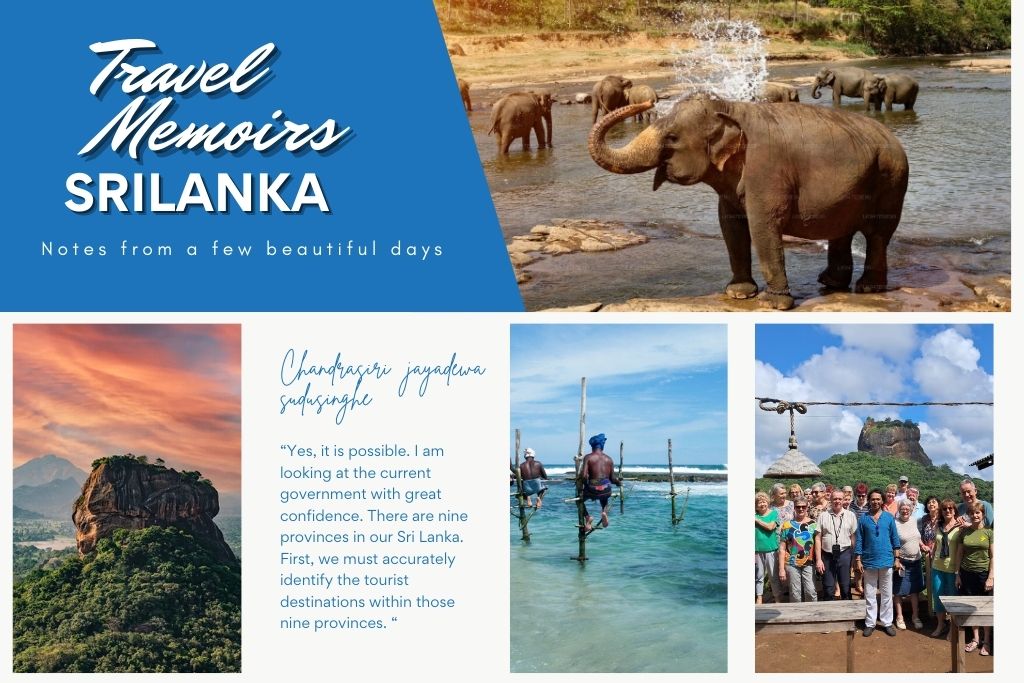
Look at the massive amount of money we earn from the Sigiriya Rock. Since 1965, by showing that rock, we must have earned trillions. Yet, the living standards of the people in Sigiriya village remain at a very low level. The Sigiriya village that existed back then is the same one that exists today. We should invest 50% of the dollars earned from that rock into the development of the village. Then, we can properly fix the village roads, improve the living standards of the locals, and provide the necessary facilities for the visiting foreigners.
There is no point in bringing ‘tourists’ to this country and making money through airport taxes, visa fees, and entrance fees at various sites if Sigiriya village is still not developed—if the villages around Yala are still not developed. Why can’t we use 50% of this earned money to uplift the living standards of these poor people? If we had done that, we could have developed this country right before our eyes, couldn’t we?”
To be honest, this has become as tangled as a ball of yarn. Money taken from one place is given to another, and then shifted somewhere else again… this is a complete ‘rolling’ of funds. To put it simply, there is an inability to sort this out and manage finances properly.
At this stage, the Ministry of Finance and the Ministry of Cultural Affairs must intervene immediately. Due to widespread fraud and corruption, the money earned must be managed in a systematic and transparent manner.
Absolutely, yes. Let me take Sigiriya as an example; our peak season runs from November to April, and during this period, we earn millions of dollars. Let’s just say, for argument’s sake, we earn 100 million—why can’t 50 million of that be spent back on Sigiriya itself? That is exactly my point.”
We boast loudly about ‘Sustainable Tourism,’ but what is the point if the village people of Sigiriya don’t benefit from the tourists visiting the site? Nature gave us a magnificent rock; thanks to King Kasyapa, a palace was built upon it, and subsequently, it became world-famous.
However, every successive government has operated with the mindset of: ‘this is our rock; we will do as we please… we don’t care about the villagers. It’s enough just to show it and collect the money.’ This was the mentality of the majority of politicians back then. If we work honestly and with a proper plan, we can uplift the entire country through this industry
Yes, it is possible. I am looking at the current government with great confidence. There are nine provinces in our Sri Lanka. First, we must accurately identify the tourist destinations within those nine provinces. Then, 50% of the income generated from those sites should be invested back into that specific province—to develop infrastructure, improve the people’s standard of living, and enhance children’s education. If we do this correctly, won’t this country develop right before our eyes?
Just go and look at Sigiriya, Yala, or Tissamaharama to see the immense pressure the local villagers are under. To be honest, we feel ashamed to take foreigners there. Those people don’t have proper clothes to wear, nor do they have decent houses to live in. They struggle to make ends meet by suffering through hardships 24 hours a day. It is truly heartbreaking.
Based on my experience, fifty percent of tourists leave with a pessimistic message. They don’t take good memories away from this country. If you’d like, you can join me in conducting a survey; it will clearly show you whether a guest departs happy or unhappy.
I’ll give you a prime example that happened recently: there was a family from Austria in one of my groups. After I dropped them off at their hotel, they went to the beach. While there, a local group working in the field approached them and offered to take them to a National Park and a turtle farm for $200. The guests agreed and went with them.
Instead of showing them wild elephants in a National Park, our people showed them the tusker at the temple on the nearby hill. When the guests realized the truth and questioned it, the group threatened them, demanding the $200. Ultimately, the guests had to call 119 and involve the police to settle the matter.
This is just one incident. Such disgusting things happen daily in this country. If we are thinking about a good tourism industry, these kinds of inhumane acts should not occur. The Tourism Development Authority and the Tourist Police must immediately collaborate to launch awareness programs for everyone in the field, starting from three-wheel drivers upward.
That’s exactly my question too. The most important point here is that the media in this country can provide immense support for this. Just look at the sheer number of TV channels, radio stations, newspapers, and magazines we have! At the very least, the two national channels could perform a great service in this regard. As far as I know, you and Vasantha Rohana from the Sri Lanka Broadcasting Corporation (SLBC) are the only ones talking about the tourism sector in this country.
The time has come to ban these ‘trashy’ dramas that are ruining our youth and instead highlight things of national importance, like the tourism industry. Tourism is an industry where we can earn money easily if we work hard and learn it properly. If we provide a good, honest service to foreigners, they build a strong bond with us. After that, they even feel motivated to help the innocent people of this country.
I’ll give you a great example. In 2004, after the Tsunami, I was able to find families from Germany to help 350 innocent Sri Lankan children—one family per child. All 350 of these children received support until they finished their A-Levels. This was a project worth 350 million.”
Good god, this is a country where you can earn dollars just by showing off a squirrel on the street, or a peacock, or a crocodile
Yes, that’s true. Every government that has come to power since 1948 is responsible for this. If they had performed their duties properly with the country’s best interests at heart, our country would be a paradise today.
Compared to other nations in the world, Sri Lanka is a country with a history spanning over two thousand six hundred years. The people of this country ought to be far more aware of its cultural, geographical, and environmental significance.
Take school “educational tours” as an example. When teachers take children to the Gal Vihara in Polonnaruwa, the teachers themselves often don’t know enough about it to educate the students. They simply herd the children along as if just going on a “trip” and return home empty-handed. We are now reaping the consequences of this negligence.
When you offer a tour to a foreigner, they ask for a tour program. They read that program from A to Z, and only then do they decide to visit the country. Tell me if you can—how many Sri Lankans actually carry a tour guidebook? The vast majority of books written about Sri Lanka have been authored by foreigners. Furthermore, if you look at the internet, is it our own people or foreigners who have created the most YouTube content about Sri Lanka? It is the foreigners who have done the most.
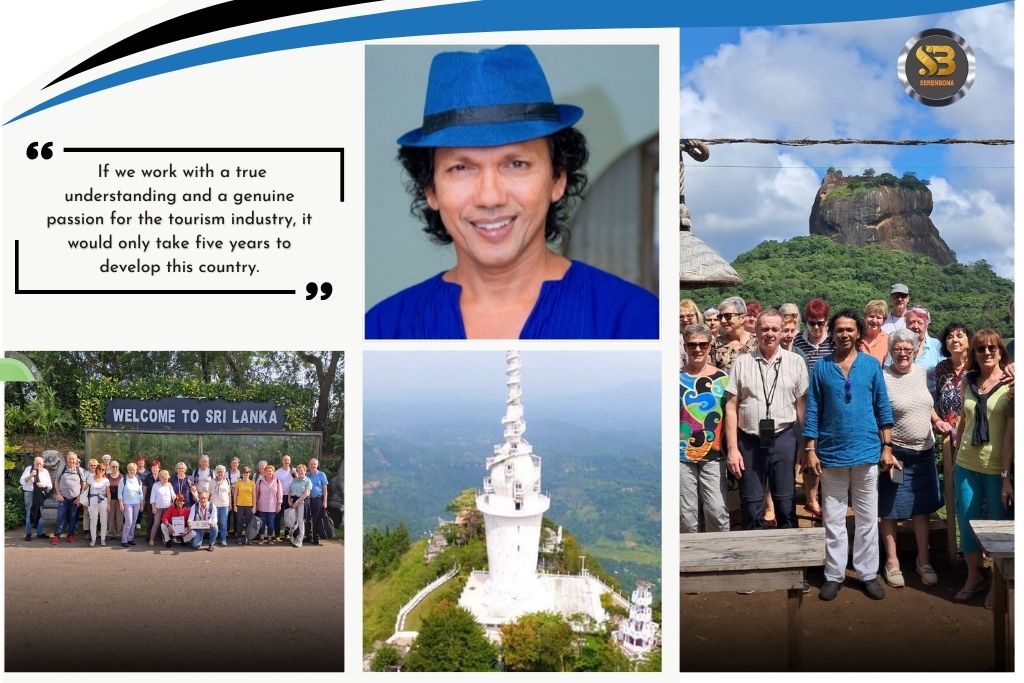
What I am clearly saying here is that Tourism as a subject must be added to school textbooks. Every child in this country, starting from Grade One, should learn about the tourism industry. History and tourism must go hand in hand. Alongside subjects like Buddhism and History, ‘Tourism’ must also be included as a core subject. If we want to see a thriving tourism industry in this country twenty years from now, we absolutely must start this in schools today.
The most serious deficiency I see is the absolute lack of a plan. Furthermore, the infrastructure required for the entire industry is severely lacking in this country. Regardless of Sri Lanka’s cultural or environmental significance, we have failed to attract ‘High Class’ or high-spending wealthy tourists to this country. The reason for this is our lack of facilities.
Take a country like Bangkok (Thailand)—look at the immense facilities available in their hotels. We have fifteen national parks in this country, but the facilities are subpar. If a guest suffers a heart attack in the middle of Yala National Park, they have to travel twenty kilometers to reach the Kirinda hospital. There are no facilities on-site. Even though Yala generates billions in revenue, once you enter the forest, there is no way to contact the Yala main office if an emergency occurs. Programs must be developed for these issues.
The next point is the entrance fees charged to foreigners upon arrival—whether it is for Sigiriya or within the Cultural Triangle. Look at how much money is charged to foreigners! We must reduce these rates. What we are doing is taking a lot of money from guests without even providing them with the basic necessary facilities.
We often point fingers at the ordinary, innocent people working in this field, accusing them of cheating foreigners. But it is wrong to blame them. In reality, it is the successive governments of this country that have exploited tourists the most. Kandy, Sigiriya, Polonnaruwa, and Anuradhapura are the places where they are fleeced the most. Charging $35 to visit Sigiriya is an absolute crime.
Right next to Sigiriya is a mountain called Pidurangala. For a guest, the ticket to Pidurangala is only 2,000 Rupees. Yet, to climb the Sigiriya rock right beside it, they charge between 12,000 and 15,000 Rupees. Sigiriya may have immense cultural value, but the fee is simply too high. Guests argue with me intensely about this. This price should be reduced by at least 30%
No, I haven’t strayed from the point. We are still a developing country. Since we earn a necessary income from this industry, it is acceptable to charge a fee. Even the foreigners don’t mind paying. However, what they repeatedly say is that this specific amount is simply too much.”
I have given bundles of suggestions to every previous government, but they didn’t value them at all and simply threw them in the trash. I have faith that the current government will change all this. The most important thing the government must do is establish a National Policy. We have an ‘off-season’ every year; during this time, we can confidently carry out promotional activities. As I mentioned before, through government intervention, we must reach out to the villages at the regional level and to the schools.
Our Sri Lankan embassies abroad have a massive responsibility to get directly involved in these promotional efforts, and the government must focus on this. Additionally, we must improve medical and sanitary facilities within our National Parks. When tourists visit these parks, they end up wasting hours waiting in queues. There are only two or three employees, and it takes hours just to buy a ticket. This must change.
Furthermore, the some Immigration officers at the airport need a thorough ‘brainwashing’ (re-orientation) to understand what the tourism industry truly is. Everyone in this field must be given the correct knowledge. Without doing these things, we will never be able to uplift the tourism industry in this country; it will only fall further into the abyss.
I promote Sri Lanka by traveling to countries like Germany, Austria, Switzerland, and the Netherlands, where I personally cook our food and arrange a ‘Sri Lankan Night’ buffet. I have never received any political support for these promotional activities, nor do I expect it. I am simply fulfilling my duty toward my country.
Actually, I met President Anura Kumara Dissanayake and Tourism Minister Vijitha Herath in Berlin, Germany. On that occasion, I handed over my proposals to both of them. I believe they will work to remove the darkness within this industry and bring forth the light. I have no desire to boast about myself; however, with the knowledge and understanding I have gained over forty years in the entire tourism industry of this country, the Ministry of Tourism can make the absolute best use of my expertise.
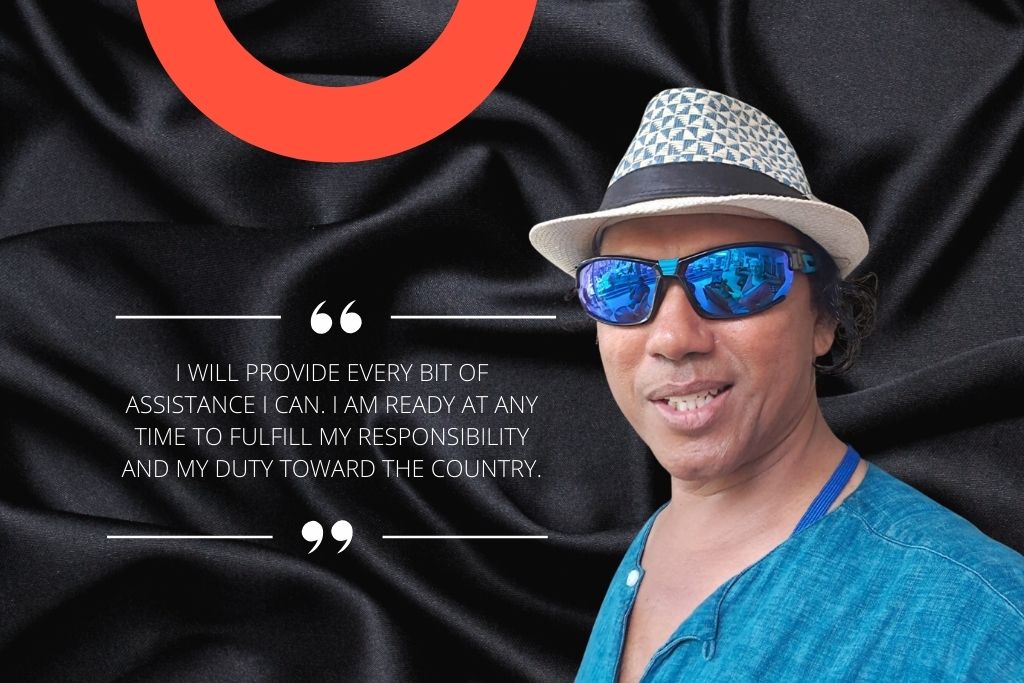
Absolutely, yes. I will provide every bit of assistance I can. I am ready at any time to fulfill my responsibility and my duty toward the country.
If we work correctly, we can definitely fix this within five years. That is certain. However, two things must be present: it must be well-planned and well-organized. If we went begging to China just to build the roads in Sri Lanka, why can’t we go to the world and ask for support to develop our tourism industry? I have the ability to make that happen.
What I say to the global traveler is this: Please, come and visit this country. When you return home, take the photos, the videos, and the memories you gathered here and tell your friends and relatives as much as you can. Tell them that Sri Lanka is a beautiful country, and that it is a land filled with loving people who truly care for foreigners.
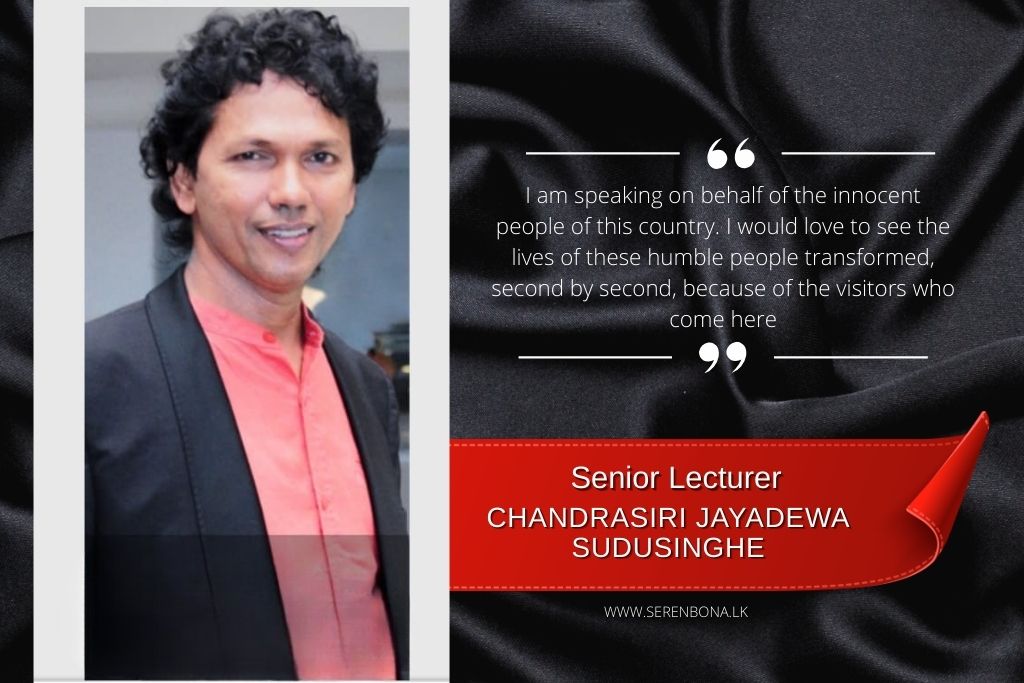
I am speaking on behalf of the innocent people of this country. I would love to see the lives of these humble people transformed, second by second, because of the visitors who come here.
Ajith Weerasuriya