

Israeli Prime Minister Benjamin Netanyahu has reportedly accepted the US “bridging proposal” for a cease-fire agreement in Gaza, according to US Secretary of State Antony Blinken.
Mr. Blinken continued, “Hamas now has to agree.”
“Blinken: Israel approves a “bridging proposal” for a cease-fire agreement.”
The two had “positive” talks in Tel Aviv, according to Mr. Netanyahu’s office, during which he reaffirmed his support for an American plan that took Israel’s security concerns into account and called for the release of the hostages that Hamas still held.In an attempt to push a deal over the finish line, Mr. Blinken had earlier issued a warning, saying this was “maybe the last opportunity” to secure a ceasefire agreement.
The Israeli government and Hamas do not share the Americans’ level of optimism that it could happen perhaps as soon as this time next week.
Each charges the other of being implacably cynical and impeding a deal.
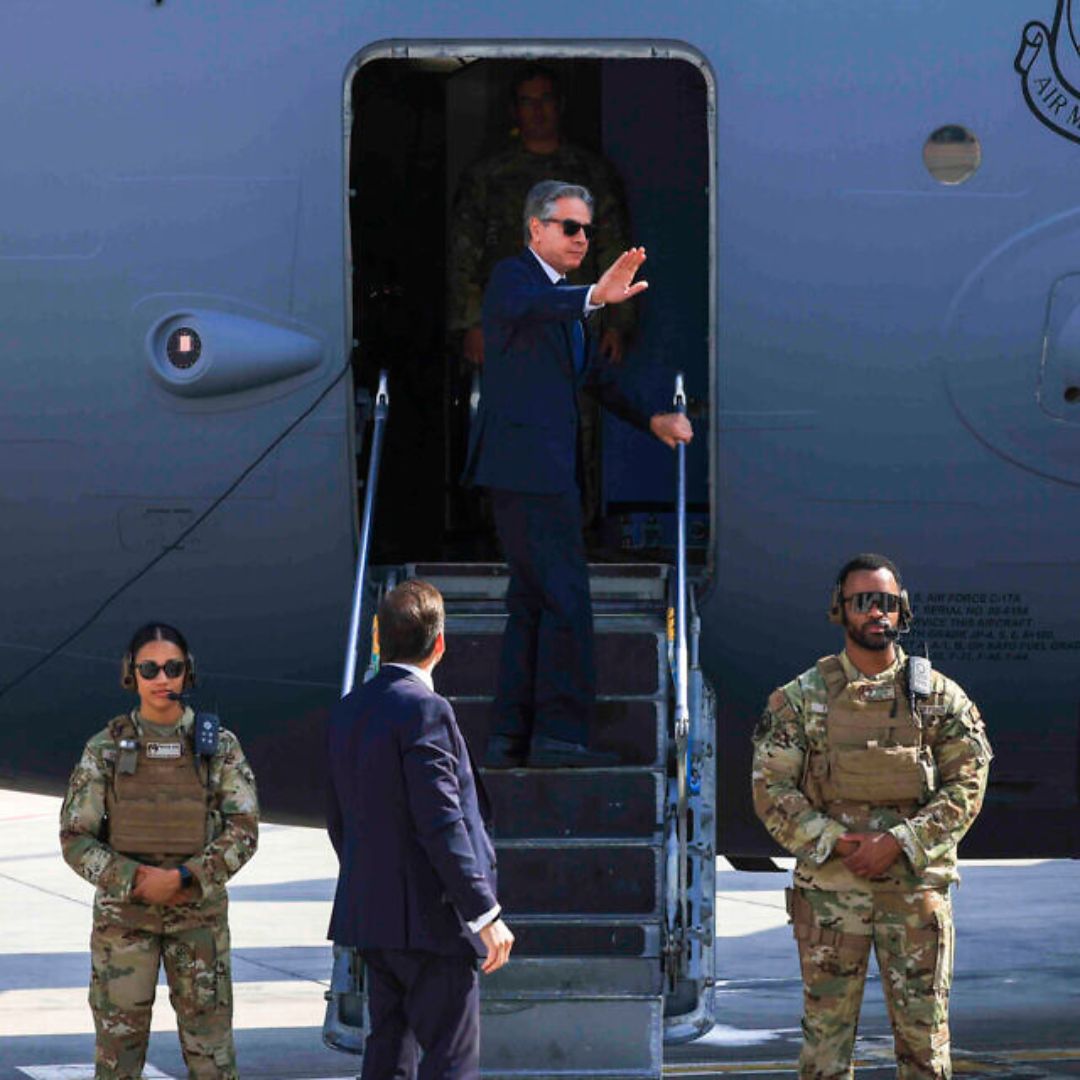
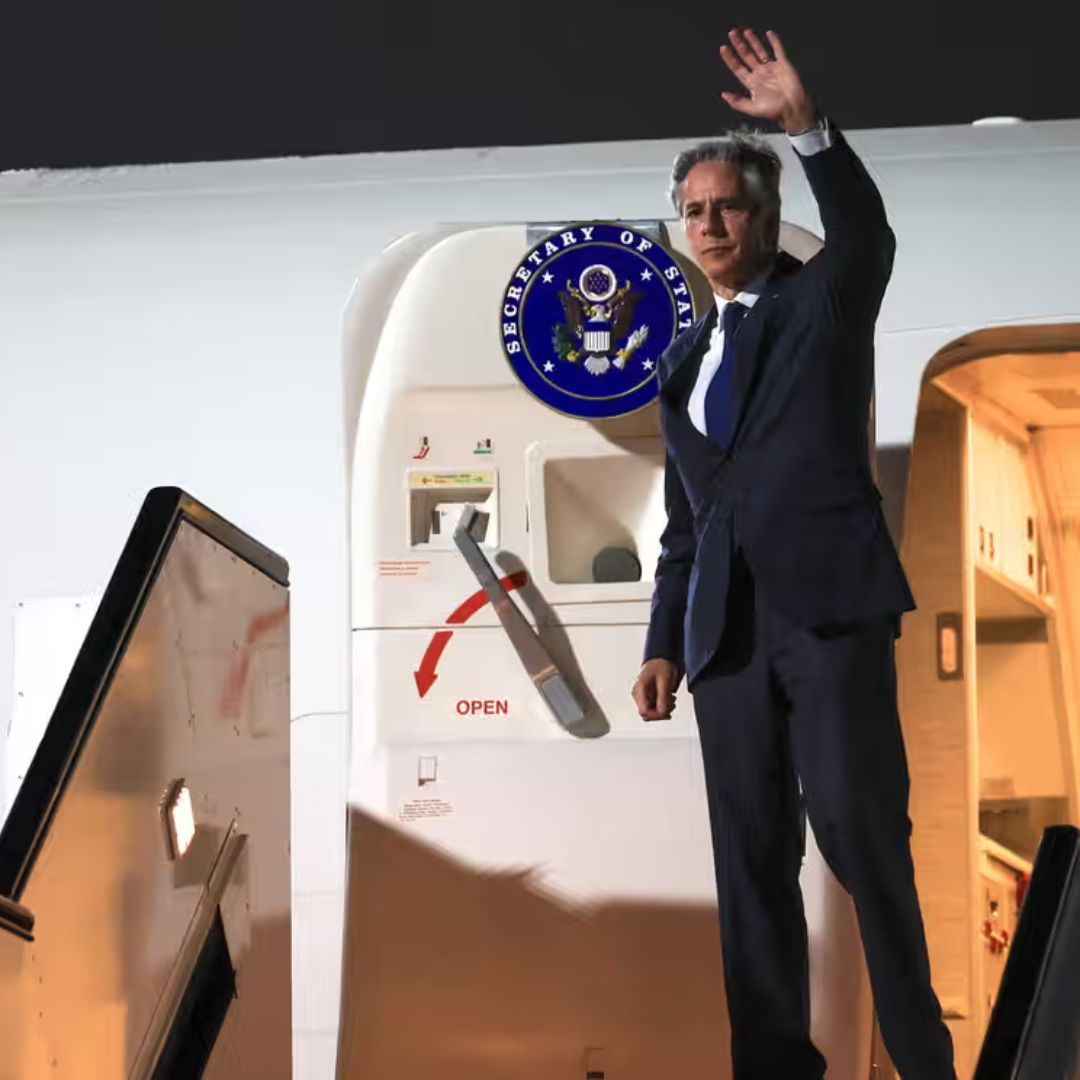
Following the negotiations, Mr. Blinken spoke in Tel Aviv and stressed “the fierce urgency” of moving forward with a ceasefire and hostage release agreement. “We’re never giving up,” he continued, warning that further delays might result in the deaths of more hostages and that more challenges might make any agreement impossible.In an attempt to advance negotiations, the US secretary of state will now visit Egypt and Qatar.
According to reports, Mr. Netanyahu informed Mr. Blinken that he would be sending a negotiation team to Cairo later this week to begin fresh negotiations with mediators from Egypt, Qatar, and the United States.
Israeli military activity is ongoing, and reports from Gaza indicate that the humanitarian situation is getting worse.
Israel claimed that during the course of the previous day, its forces and aircraft had “eliminated dozens of terrorists,” destroyed Hamas compounds, and discovered a network of tunnels that contained missiles and rockets.Palestinian media said that four more people had died in an Israeli airstrike on a car in Gaza City, in the north, and that six more had died in an Israeli airstrike near an internet access point close to the southern city of Khan Younis on Monday.
In response to an unprecedented attack on southern Israel on October 7th, in which approximately 1,200 people were killed and 251 taken hostage, the Israeli military launched a campaign in Gaza to destroy Hamas.
Since then, more than 40,130 people have died in Gaza, according to the health ministry run by Hamas in the territory.Under an agreement reached in November, approximately 240 Palestinian detainees held in Israeli prisons were exchanged for the release of 105 hostages by Hamas during a week-long ceasefire. According to Israel, 111 hostages are still being detained, 39 of whom are thought to be dead.
On Monday, Mr. Blinken was in Israel for a series of meetings with important Israeli officials.
Following one meeting with Defence Minister Yoav Gallant, a sizable gathering of demonstrators was heard yelling “Blinken we trust you, bring them home” and “SOS USA, hostage deal now” outside. Some had hostage photos in their hands.
It was evident from Mr. Blinken’s messages that they were urgent.
Before meeting with President Isaac Herzog in Tel Aviv, he declared, “This is a decisive moment, probably the best, maybe the last opportunity to get the hostages home, to get a ceasefire and to put everyone on a better path to enduring peace and security.”In response to President Biden’s directives, he continued, “I’m here as part of an intense diplomatic effort to try to get this agreement to the line and ultimately over the line.” “Everyone needs to say “yes” now and stop looking for reasons to say “no.”
Alongside him, President Herzog laid the blame for the agreement’s failure on “Hamas’ refusal to move forward.”The three hours that Mr. Blinken and Mr. Netanyahu spent together in Jerusalem were described by the latter’s office as “positive and was held in a good atmosphere.”
An additional brief statement stated, “The prime minister reaffirmed Israel’s commitment to the current American proposal on the release of our hostages, which takes account of Israel’s security needs, which he strongly insists on.”The prime minister declared on Sunday that “pressure needs to be directed” towards Hamas, which the US, Israel, and other nations have outlawed as a terrorist organisation, and that the group is “completely obstinate.”A representative from Hamas’s political bureau based in Qatar told the BBC on Monday that the organisation was “still interested” in making a deal, even though he added that it would not be attending the meetings in Cairo.Basem Naim stated, “We don’t need a new round of negotiations or to discuss the new demands of Benjamin Netanyahu because we agreed on a deal [through mediators] on July 2.
“The other party has perceived our greatest degree of flexibility and positivity as a weakness and has responded with greater force; he is not interested in achieving a ceasefire, but rather in igniting the region and furthering his own personal political objectives.”The United States is hoping to close the differences on a ceasefire agreement in the next few days.
But rather than the warring parties, Washington is imposing that deadline. Furthermore, it appears that neither the Hamas leaders nor the Israeli prime minister share the same sense of urgency.
They remained steadfast in their beliefs and dug in with their statements from last night.
Mr. Blinken is scheduled to depart Israel on Tuesday and travel to Egypt, which, along with Qatar, has played a significant role as a mediator and can transmit messages directly to Hamas.Last Friday, the mediators declared that they had put forth “a proposal that narrows the gaps between the parties” that adhered to the guidelines that President Joe Biden had laid out on May 31. The proposal would be implemented in three stages:
The bridging proposal has not been made public by the Americans, but there are reportedly still significant disagreements over a number of issues, such as Israel’s ongoing military presence in Gaza, the freedom of displaced Palestinians to travel north to south, and the number and makeup of Palestinian prisoners who would be freed from Israeli prisons in exchange for Israeli hostages.
Over the past few weeks, one of the Biden administration’s principal envoys in the area, Brett McGurk, has been collaborating with the Egyptians to resolve the issue surrounding the Philadelphi corridor, a narrow stretch of land that forms Gaza’s border with Egypt.According to Mr. Netanyahu, Israel will stay there in order to prevent smuggling and Hamas rearmament. According to Hamas, it just signifies that Israeli occupation will continue and that the war will not end.
[BBC]