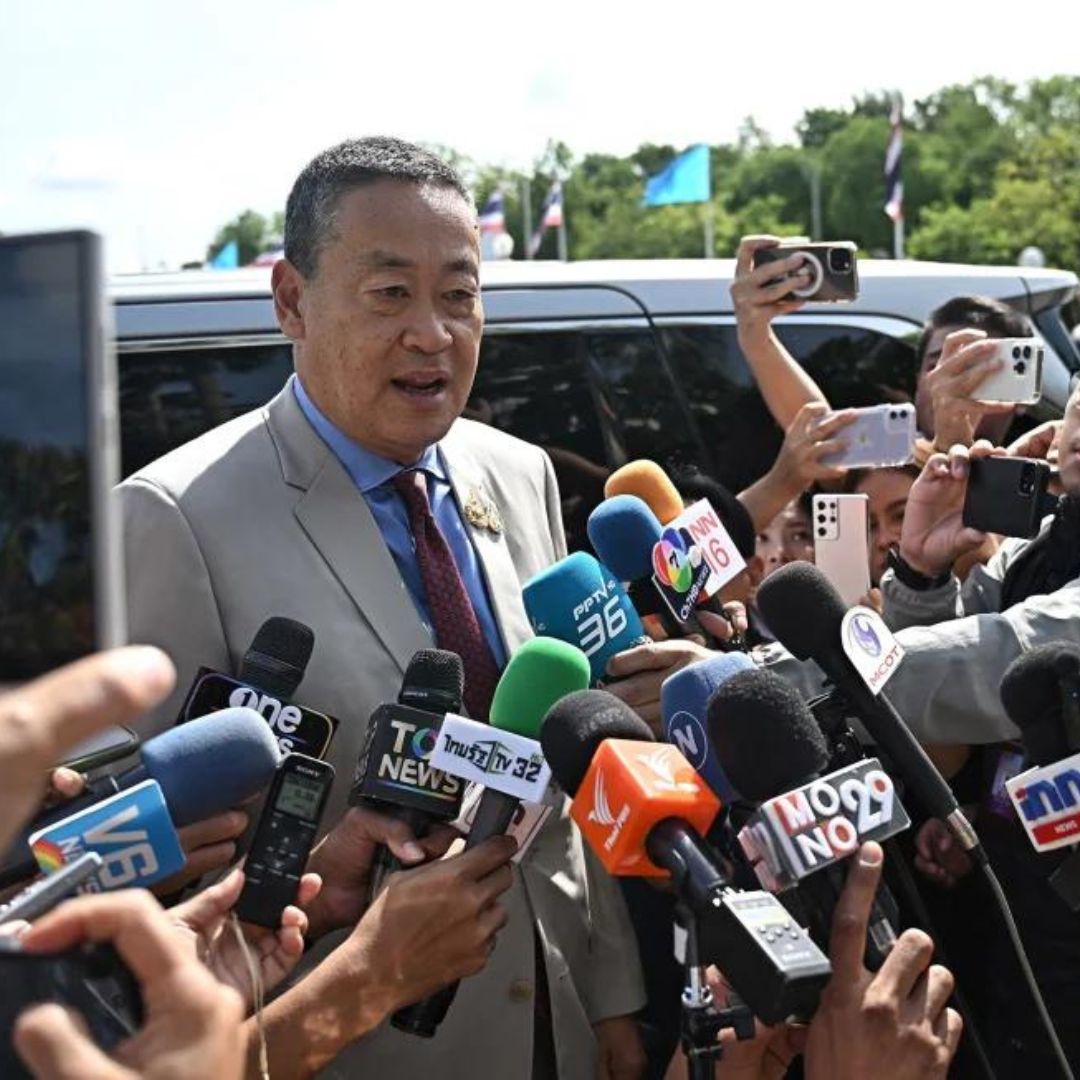
Prime Minister Srettha Thavisin was removed from office by a Thai court on Wednesday due to an ethical transgression, further upending Thai politics following the main opposition party’s court-ordered dissolution one week prior.The case for which Srettha was found guilty by the Constitutional Court concerned his appointment of a member of the Cabinet who had been detained on suspicion of trying to bribe a judge.
“Court order removes Thai Prime Minister Srettha Thavisin from office”
By a vote of 5 to 4, the court dismissed Srettha from office right away.
Until Parliament confirms a new prime minister, the Cabinet will continue to function in an acting capacity. Parliament can appoint new members for an indefinite period of time.In April, Srettha reorganised the Cabinet and named Pichit Chuenban as a minister of the Prime Minister’s Office. Following allegations that he attempted to bribe a judge with 2 million baht ($55,000) in cash concealed in a grocery bag regarding a case involving former Prime Minister Thaksin Shinawatra, Pichit was imprisoned for six months in 2008 on charges of contempt of court.
A few weeks after taking office, Pichit resigned from his position due to the resurgence of controversy surrounding the incident.Despite the fact that Pichit has already served his jail sentence, the court found that his actions were dishonest, as determined by the Supreme Court.The court decided that Srettha, as prime minister, is solely in charge of verifying the credentials of his Cabinet picks. It stated that he was aware of Pichit’s background but chose to nominate him anyhow, leading them to conclude that he had broken the ethics rules.Former Senate members who had been installed by the military and who had rejected Move Forward’s prime ministerial candidate when the party was trying to form a government following its election victory filed the petition against Srettha.
The petition against Srettha was perceived as an attempt to support his coalition government’s pro-military political party.Thailand’s royalist establishment views its courts, particularly the Constitutional Court, as a bulwark. Using the courts and ostensibly independent state organisations like the Election Commission, the establishment has used rulings to destabilise or topple political rivals.
In August of last year, Srettha was appointed prime minister even though his Pheu Thai party didn’t win the majority vote. The largest partner of Move Forward at the time, Pheu Thai, excluded it from the coalition after Move Forward was denied power by the Senate, whose term ended in May. Pheu Thai then teamed up with parties connected to the previous military-controlled government to secure enough support from other parties and the Senate to approve a new prime minister.
The progressive Move Forward Party, which won the most seats in the 2023 election but was unable to win the presidency, was ordered to dissolve by the Constitutional Court last week on grounds that it had broken the constitution by putting forth a bill to amend a law that forbade defaming the nation’s royal family. Already, the party has reorganised under the name People’s Party.