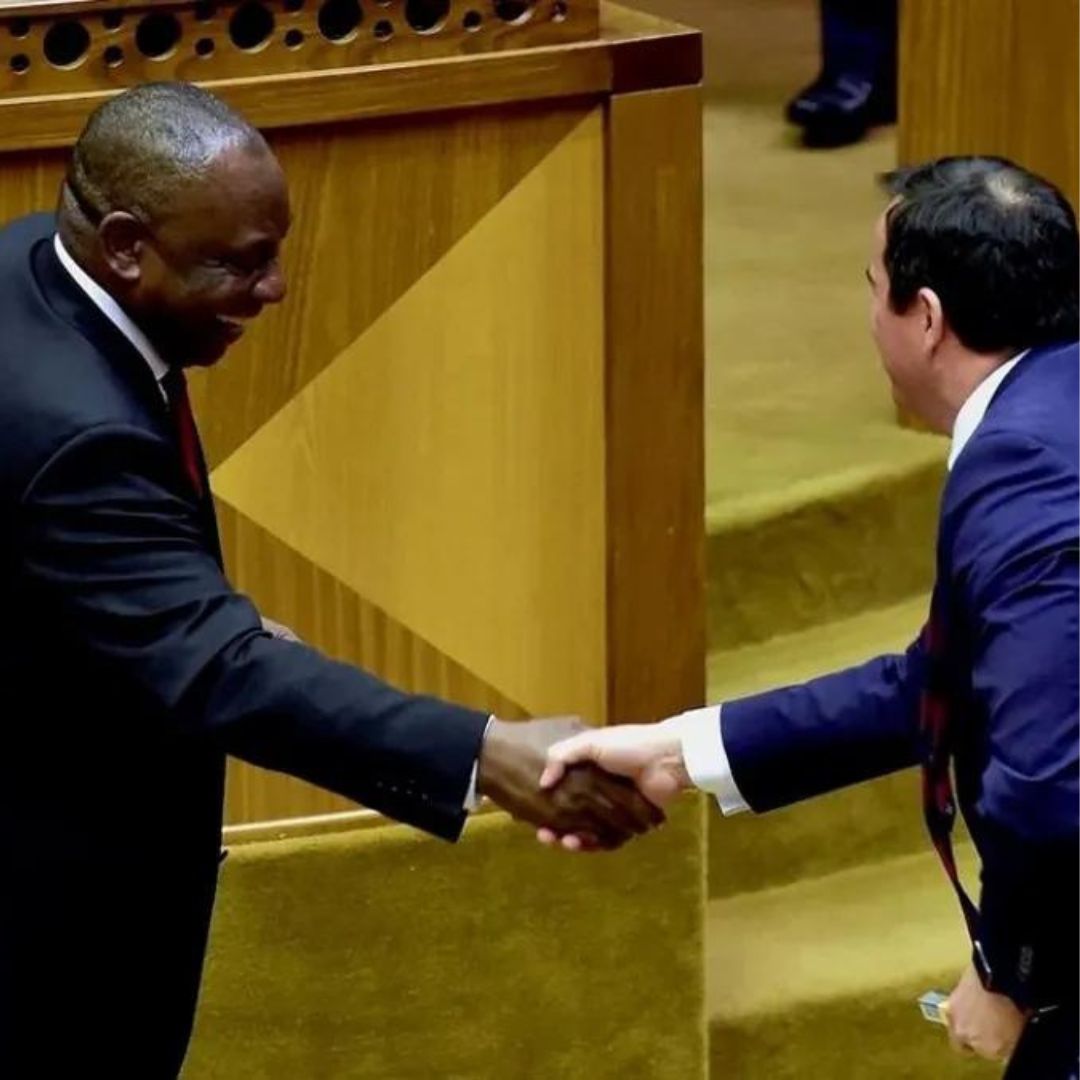
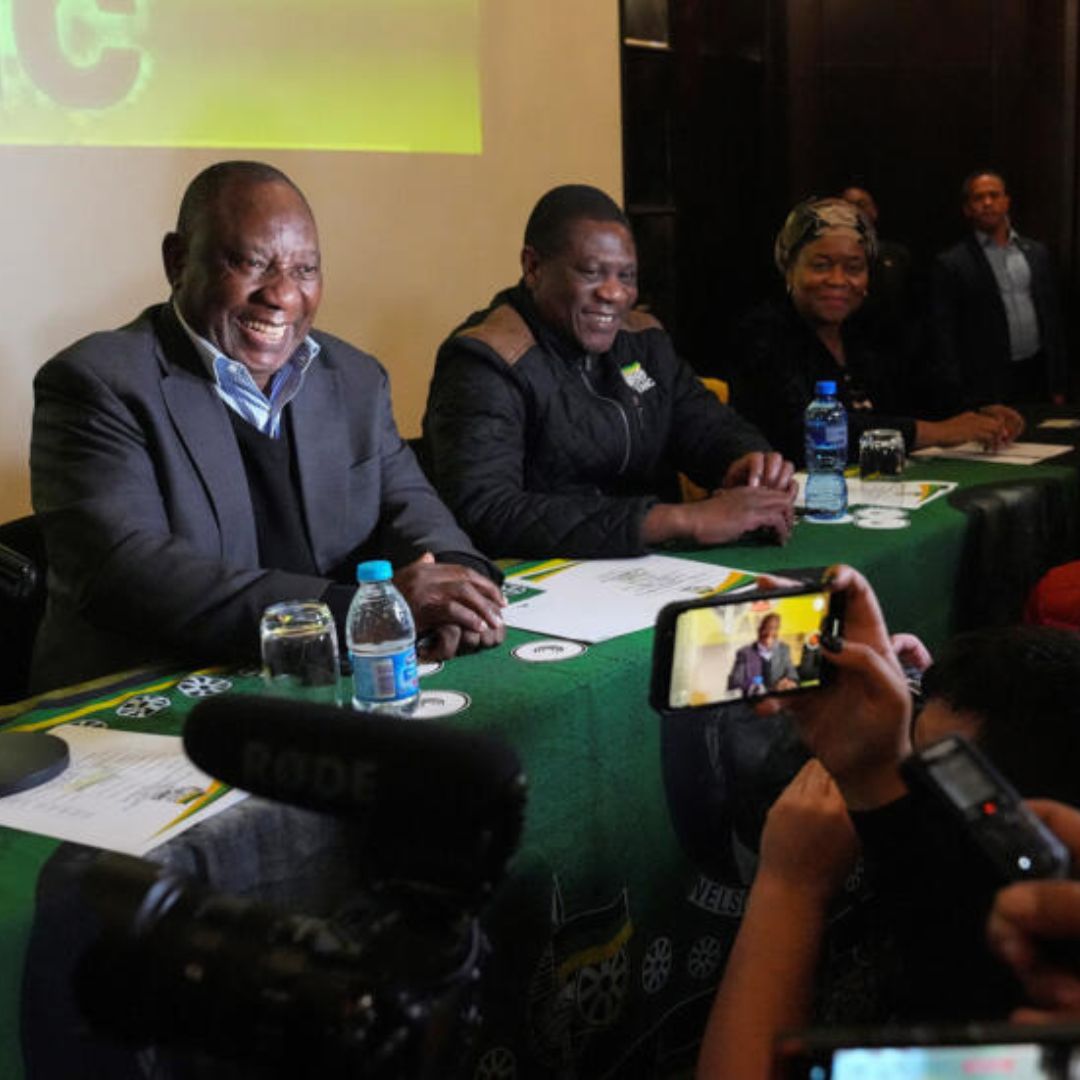
Following the loss of the parliamentary majority for his ruling African National Congress (ANC) party in May’s elections, President Cyril Ramaphosa of South Africa has unveiled a new coalition government.
“The government of national unity… is unprecedented in our democracy’s history,” he declared.
Out of the 32 cabinet positions, the Democratic Alliance (DA), which supports free markets, will hold six, while the African National Congress (ANC) will hold twenty. Smaller parties split up the remaining six portfolios.
After weeks of tense negotiations that threatened to destroy the agreement, these appointments were made. At one point, Mr. Ramaphosa accused the DA of trying to establish a “parallel government” in violation of the constitution.
“Unveiled is the new coalition government in South Africa.”
The public’s dissatisfaction with the ANC’s inadequate track record in providing essential services and combating unemployment, poverty, and corruption was evident in the party’s declining support during the elections.
When the ANC, led by Nelson Mandela, took office in 1994, South Africa’s long history of white minority rule came to an end. Its power sharing with the DA, which some view as representing white interests, has drawn criticism from some of its activists.
The business community hailed the coalition government, arguing that it would guarantee economic stability as opposed to a possible agreement with two radical parties that have broken away from the ANC.
The ANC will retain important ministries in the new cabinet, including finance, defence, and foreign affairs, where it has been outspoken in endorsing Palestinian rights and sharply denouncing Israeli practices in Gaza. Former justice minister Ronald Lamola has taken over as the new foreign minister in place of outgoing minister Naledi Pandor.
The DA is in charge of immigration under the home affairs portfolio, and it also oversees public works, which has been the subject of numerous corruption scandals. John Steenhuisen, the party leader, will head the ministry of agriculture.
“The incoming government will prioritise rapid, inclusive, and sustainable economic growth and creation of a more just society,” Mr. Ramaphosa stated in a Sunday speech that was broadcast on television.
As “an important step forward, and a testament to the resilience of our democracy,” the ANC applauded the decision.
“Proud to rise to the challenge and take our place, for the first time, at the seat of national government,” the Democratic Alliance declared in a statement.
“Good governance, zero tolerance for corruption, and pragmatic policy-making” were other promises made.
"an important step forward, and a testament to the resilience of our democracy,"
The ANC and the DA still have sharp political differences even after reaching a coalition cabinet agreement.
The DA’s opposition to the ANC’s national healthcare policy and black economic empowerment programme is arguably the biggest and most contentious issue.
Importantly, the ANC continues to hold authority over the government departments of trade, land reform, and mining, all of which are essential to its programmes for black economic empowerment.
In the elections held in May, the DA received 22% of the vote, while the ANC received 40%.